SPARKHOBBY BETAFPV SuperD ELRS 2.4GHz/915MHz Diversity Double Channel Receiver CRSF Review (2026)
Updated September 21, 2026 · Research-based review
Our verdict
This SuperD ELRS diversity receiver suits pilots who want a proven dual-antenna link for long range or freestyle flying and do not mind buying it through a reseller listing. The two-antenna design is the main strength, and the main catch is double-checking which frequency version actually ships.
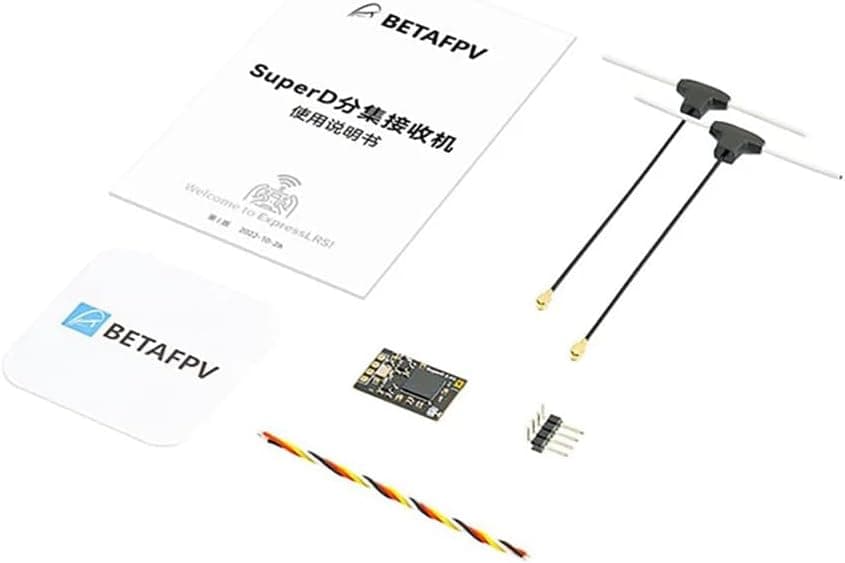
SPARKHOBBY BETAFPV SuperD ELRS diversity receiver on 2.4GHz/915MHz with double channel design and CRSF output.
Price range: See on Amazon
What we liked
- + Double channel design keeps the link alive if one path fades
- + 2.4GHz/915MHz listing gives flexibility for long range or standard use
- + BETAFPV SuperD is a known, well-supported receiver design
Trade-offs
- - Reseller listing, so confirm which frequency version you receive
- - Setup and binding take longer than basic single-antenna receivers
Who it is for
A diversity receiver like the SuperD ELRS is aimed at pilots who fly further from the transmitter than a typical park session, or who fly in environments with more radio interference, such as tree lines, urban clutter, or group flying fields with several other 2.4GHz radios active at once. Freestyle and long-range pilots benefit most, since a second antenna and receive chain gives the link a better chance of holding on when one antenna's line of sight is briefly blocked by an obstacle or the airframe's own orientation. Racers on tight, low-altitude tracks with less obstruction may not need the extra chain as much, but many still run diversity receivers simply for the added margin. This particular listing is resold by SPARKHOBBY, so buyers are effectively purchasing the BETAFPV SuperD design through a secondary storefront rather than directly.
Design and antennas
The SuperD design uses two complete receive chains and two antennas rather than a single antenna feeding one chain, which is the core of what diversity means on this class of receiver. Each chain gets its own small RF frontend, and the receiver's firmware compares the two to favor whichever antenna is currently getting a cleaner signal. A temperature compensated crystal oscillator keeps the radio's timing accurate across a wider range of ambient temperatures than a standard crystal would, which matters for pilots flying in cold winter mornings or hot midday sun where cheaper receivers can drift. Output is CRSF, the serial protocol most modern flight controllers and OSD systems expect, so wiring into a typical FPV stack is straightforward once the correct pads are identified.
Frequency and version
The listing covers both 2.4GHz and 915MHz variants of the SuperD ELRS, which is useful context but also the main thing to verify before buying, since the two versions are not interchangeable and require different transmitter modules to bind. The 2.4GHz version is the standard choice for most pilots and matches the internal ELRS radio built into most modern transmitters, including many Radiomaster models. The 915MHz version is aimed at long-range flying, where the lower frequency trades some data rate for better penetration through obstacles and longer effective range, and it needs a 915MHz-capable transmitter module to pair with. Because this is a reseller listing rather than a direct BETAFPV storefront page, confirming the exact frequency variant in the order before binding avoids a mismatch.
Setup considerations
Binding and configuring a diversity receiver takes a bit more attention than a basic single-antenna nano receiver, mostly because there are two antennas to route and secure rather than one, and because the receiver's firmware and channel mapping still need to be set correctly in the flight controller software. Pilots new to ELRS should expect to spend some extra time on antenna placement, keeping both antennas away from carbon fiber frame arms and positioned roughly perpendicular to each other for the best diversity benefit. Firmware updates through the ELRS configurator are the same process as any other ELRS receiver, and the CRSF output keeps wiring identical to other CRSF receivers pilots may already have used, which shortens the learning curve for anyone who has set up an ELRS system before.
Bottom line
The BETAFPV SuperD ELRS design behind this listing is a well-regarded diversity receiver, and the dual antenna, dual chain layout genuinely helps hold the control link on longer or more obstructed flights compared with a single-antenna nano receiver. Buying through the SPARKHOBBY reseller listing does not change the hardware, but it does mean paying closer attention to which frequency version is being ordered and to seller reviews and shipping terms compared with buying directly from BETAFPV or an established FPV retailer. For pilots who already know they want a SuperD-style receiver and are comfortable with the extra setup step, it is a solid choice, particularly for long-range or dense-interference flying where a single antenna receiver is more likely to drop out.
Frequently asked questions
What does diversity mean on the SuperD ELRS receiver?
It means the receiver has two antennas and two receive chains and automatically favors whichever antenna currently has the cleaner signal, which helps the link survive brief line-of-sight blockages.
Are the 2.4GHz and 915MHz versions interchangeable?
No, they use different radio hardware and need a matching transmitter module, so the frequency has to be chosen correctly before binding.
What output protocol does this receiver use?
It outputs CRSF, the serial protocol used by most modern flight controllers and OSD systems for ELRS and Crossfire receivers.
Is buying this through a reseller listing a concern?
The underlying hardware is the same BETAFPV SuperD design, but buyers should confirm the exact frequency version and check the seller's listing details before ordering.
Prices change often, so check the current price and availability on Amazon.
Check price on AmazonDrone FPV Lab may earn a commission from the link above.