BETAFPV SuperD ELRS Diversity Receiver Dual RX Chains 2 Antennas TXCO CRSF 915M Review (2026)
Updated September 14, 2026 · Research-based review
Our verdict
A genuine dual-chain diversity receiver on the 915MHz band built for long range ExpressLRS pilots who want maximum penetration through trees and obstacles at distance. It needs a matching 915MHz radio module, and its two antennas take up more space than a basic nano receiver on tight builds.
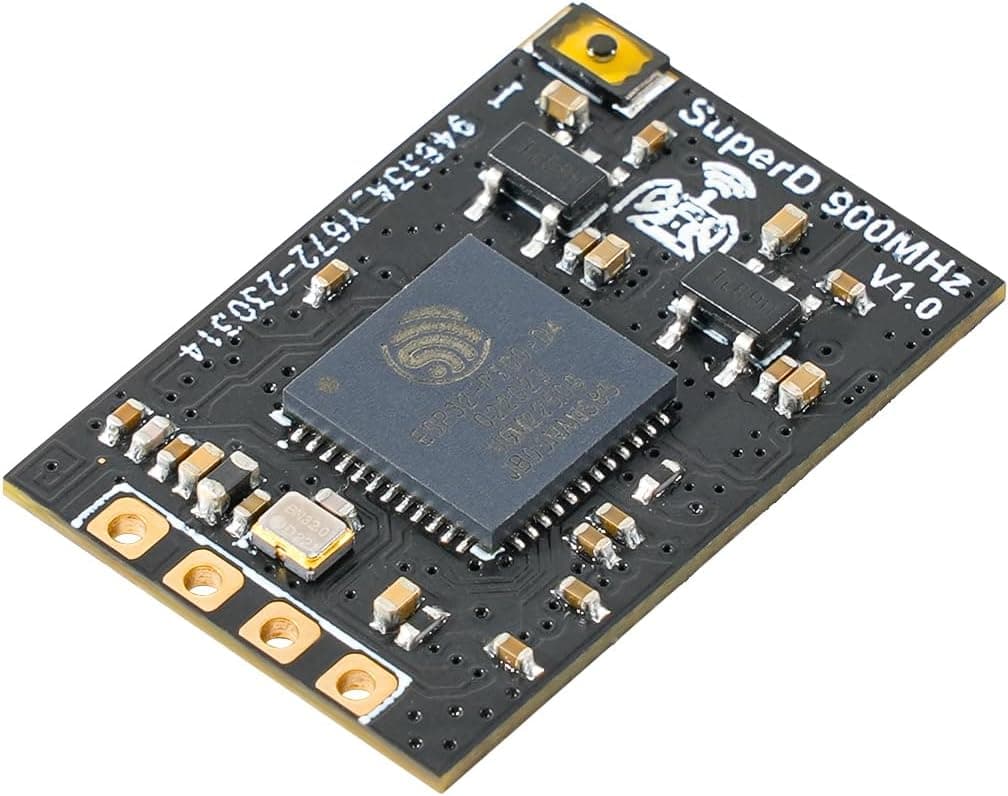
BETAFPV SuperD ELRS diversity receiver with dual RX chains, 2 antennas, TXCO, CRSF output and a 915M option.
Price range: See on Amazon
What we liked
- + Dual RX chains give true diversity, so both antennas process signal
- + CRSF protocol provides telemetry like link quality to your radio
- + 915M version offers long range penetration for distant flights
Trade-offs
- - 915M band needs a matching 915M radio module
- - Larger than basic nano RXs, so tiny builds may lack space
Who this receiver is for
The SuperD 915MHz targets long range and BVR (beyond visual range) pilots who need the best possible link penetration through terrain, buildings, and dense tree cover, since lower frequency bands like 915MHz travel further and bypass obstacles more effectively than 2.4GHz. It suits builders who already own or plan to buy a 915MHz capable ExpressLRS transmitter module, since this band requires a matching radio side module rather than working with a standard 2.4GHz-only transmitter. Freestyle and racing pilots flying at typical park or field ranges do not need the long distance benefits this receiver is built for, and would be better served by a lighter, smaller 2.4GHz nano receiver instead. Pilots building dedicated long range or fixed wing aircraft where link reliability at extreme distance matters more than raw refresh rate are the clearest fit for this receiver.
What is inside the design
The SuperD uses an ESP32 PICO D4 microcontroller paired with two SX1276 RF chips, one per antenna, giving true dual chain diversity reception rather than a single chip switching between antennas. A shared TCXO, or temperature compensated crystal oscillator, keeps both RF chips synced to an accurate, stable frequency reference even as the receiver heats up during flight, which matters for maintaining a locked link over long range and long duration flights. It weighs about 1.2 grams excluding the two antennas, with a compact 22 by 14mm PCB, and communicates over the CRSF protocol so telemetry like link quality and RSSI feeds back to the pilot's radio. The two Dipole T antennas connect through IPEX MHF U.FL connectors, letting pilots swap a damaged antenna without desoldering the whole receiver, and telemetry output power is rated around 17dBm.
Setting it up and flying with it
Binding follows the standard ExpressLRS process, but pilots need a 915MHz transmitter module to match this receiver's band, since it will not bind to a 2.4GHz-only radio regardless of firmware settings. Mounting the two antennas apart from each other, ideally at different angles or on opposite sides of the aircraft, preserves the diversity benefit by giving each RF chain a distinct view of the transmitter, which matters most during long range flights where the aircraft's orientation relative to the pilot changes constantly. On a long range or fixed wing build, this receiver rewards careful antenna placement away from carbon fiber structure and other RF-blocking materials, since 915MHz still benefits from a clean line of sight even though it penetrates obstacles better than 2.4GHz. Telemetry feedback through CRSF gives pilots real time link quality data on their radio or goggles, useful for judging how much further a flight can safely push before signal degrades.
Trade-offs and how it compares
Against the RadioMaster RP4TD, which runs true diversity on the 2.4GHz band with a higher refresh rate up to 1000Hz, the SuperD trades that faster update rate for the superior range and obstacle penetration that comes with operating on 915MHz, making the choice mostly about whether raw distance or control responsiveness matters more for a given build. Compared with the RadioMaster RP3, a single antenna nano receiver, the SuperD's dual chain design and larger footprint suit dedicated long range builds better than tight freestyle frames where every gram counts. Pilots who fly a mix of freestyle and occasional long range trips may find it simpler to keep a 2.4GHz diversity receiver as their primary setup and reserve a 915MHz receiver like this one specifically for dedicated long range aircraft.
Verdict and who should look elsewhere
For long range and BVR pilots who already have or plan to buy a 915MHz ExpressLRS transmitter module, the SuperD's true dual chain diversity and TCXO stability make it a strong choice for maximizing link reliability at distance. Pilots without a 915MHz-capable radio should skip this receiver entirely, since band mismatch means it simply will not bind, and a 2.4GHz diversity receiver is the correct choice for standard transmitters. Freestyle and tight racing builds where space and weight are at a premium are also better served by a smaller single antenna nano receiver, since this one's dual antenna design is built for range rather than for saving grams.
Frequently asked questions
Does the SuperD 915MHz work with a standard 2.4GHz transmitter?
No, it requires a matching 915MHz ExpressLRS transmitter module and will not bind to a 2.4GHz-only radio.
Why choose 915MHz over 2.4GHz for long range flying?
Lower frequency signals like 915MHz penetrate obstacles such as trees and buildings better and travel further than 2.4GHz, at the cost of a lower maximum refresh rate.
Is this a true diversity receiver?
Yes, it uses two separate SX1276 RF chips and antennas that both actively receive at once rather than a single chip switching between antennas.
How much does the SuperD weigh?
About 1.2 grams excluding the two antennas, on a compact 22 by 14mm PCB.
Prices change often, so check the current price and availability on Amazon.
Check price on AmazonDrone FPV Lab may earn a commission from the link above.