RadioMaster RP3 ELRS FPV Receiver 2.4GHz ExpressLRS Nano RX with 65mm UFL T Antenna Review (2026)
Updated September 20, 2026 · Research-based review
Our verdict
The RadioMaster RP3 is a compact ExpressLRS nano receiver built around proven radio hardware, and this listing pairs it with a single 65mm UFL T antenna for a lightweight install in small freestyle builds. It trades the redundancy of a true dual-antenna diversity receiver for a lower profile package.
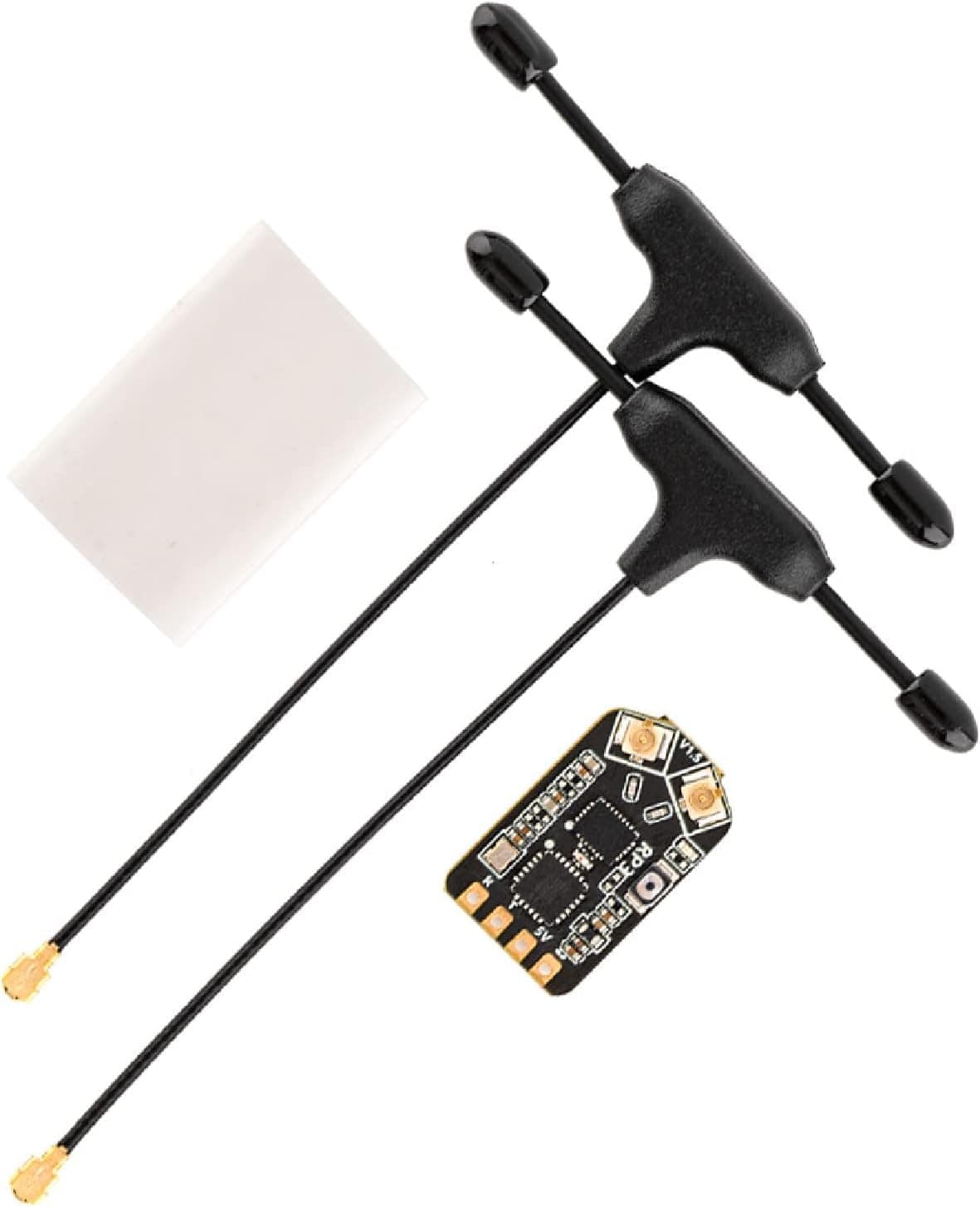
RadioMaster RP3 ELRS nano receiver on 2.4GHz with a 65mm UFL T antenna, a compact choice for freestyle quads.
Price range: See on Amazon
What we liked
- + Compact RP3 fits into cramped micro builds easily
- + T antenna offers good range for everyday freestyle flying
- + RadioMaster firmware support is strong and widely documented
Trade-offs
- - Single antenna path is less robust than true diversity receivers
- - UFL antenna connector can loosen after repeated hard crashes
Core hardware and radio chipset
RadioMaster builds the RP3 around the ESP8285 microcontroller paired with a Texas Instruments SX1280 RF chip, the same general chipset family used across many current ExpressLRS receivers, and adds a Skyworks SE2431L front end that provides a low noise amplifier for better receive sensitivity along with a power amplifier that supports up to 100 milliwatts on the telemetry return link back to the transmitter. The receiver runs ExpressLRS firmware over its LoRa and FLRC 2.4GHz radio links, a combination the ELRS project has tuned specifically to balance long range against low latency for FPV control.
Antenna setup on this listing
This specific listing pairs the RP3 receiver with a single 65mm UFL T-style antenna rather than the dual-antenna diversity configuration RadioMaster sells on some other RP3 variants. A single antenna path keeps the build lighter and simpler to route inside a cramped micro frame, but it does not have the built-in redundancy of a true diversity receiver, which switches between two antennas to fall back on a clean signal if one antenna gets shadowed by the frame or a prop during a hard maneuver. Pilots who fly in radio-noisy environments or want maximum link robustness may prefer a diversity RP-series receiver instead.
Connectivity and setup
The RP3 communicates with a flight controller over the CRSF protocol, which is the same serial link most modern ELRS and Crossfire receivers use, so wiring into an existing flight stack is generally a two or three wire job once you have a spare UART. Firmware updates and configuration changes can be done over built-in WiFi directly on the bench without unplugging or removing the receiver from the quad, and binding to a transmitter can be done using a bind phrase rather than the older method of pressing a physical bind button, which is a convenience when a receiver is buried inside a tight frame stack.
Fit for micro and freestyle builds
At roughly 4.6 grams including its antennas, the nano form factor RP3 is aimed at whoop, micro, and small freestyle frames where every gram matters, and the compact PCB size makes it easier to tuck behind a flight controller or stack in a tight canopy. RadioMaster's documentation and firmware support for the RP-series is well established within the ExpressLRS community, so troubleshooting guides, wiring diagrams, and firmware updates are easy to find compared to some smaller receiver brands. The UFL antenna connector is a common failure point across nano receivers generally, and repeated hard crashes can work the connector loose over time, so it is worth inspecting the connection after a bad tumble. A small dab of hot glue over the connector after binding is a common precaution pilots take to keep it seated through everyday flying.
Who should buy this receiver
This RP3 variant fits pilots building a lightweight micro or small freestyle quad who want the well-documented ExpressLRS RadioMaster ecosystem without paying the small weight and space penalty of a dual-antenna diversity receiver. It is a reasonable everyday freestyle choice rather than a specialist long-range or race-day pick, since a single antenna path is inherently less resilient than diversity when the signal briefly drops out. Anyone who regularly flies at the edge of their range, or wants maximum reliability for competition, should look at one of RadioMaster's diversity RP-series receivers instead.
Frequently asked questions
Is this RP3 a diversity receiver?
No, this listing ships with a single 65mm UFL T antenna, not the dual-antenna diversity configuration RadioMaster offers on some other RP3 versions.
What protocol does the RP3 use to talk to a flight controller?
It uses the CRSF serial protocol over a UART connection, the same link most current ExpressLRS and Crossfire receivers use.
Can I update the RP3 firmware without removing it from the quad?
Yes, it has built-in WiFi so firmware updates and configuration changes can be done on the bench without unplugging the receiver.
How much does the RP3 weigh?
RadioMaster lists the RP3 at approximately 4.6 grams including its antennas.
Prices change often, so check the current price and availability on Amazon.
Check price on AmazonDrone FPV Lab may earn a commission from the link above.