DJI Air 3 (DJI RC-N2), Dual Primary Cameras, 4K/60fps HDR Review (2026)
Updated September 14, 2026 · Research-based review
Our verdict
A dual primary camera drone pairing a wide and a 3x medium tele lens, both shooting 4K at 60fps with HDR, controlled through the phone mounted RC-N2. It suits travel shooters who want two matched focal lengths without stepping up to a Mavic, though the newer Air 3S has since added a larger sensor.
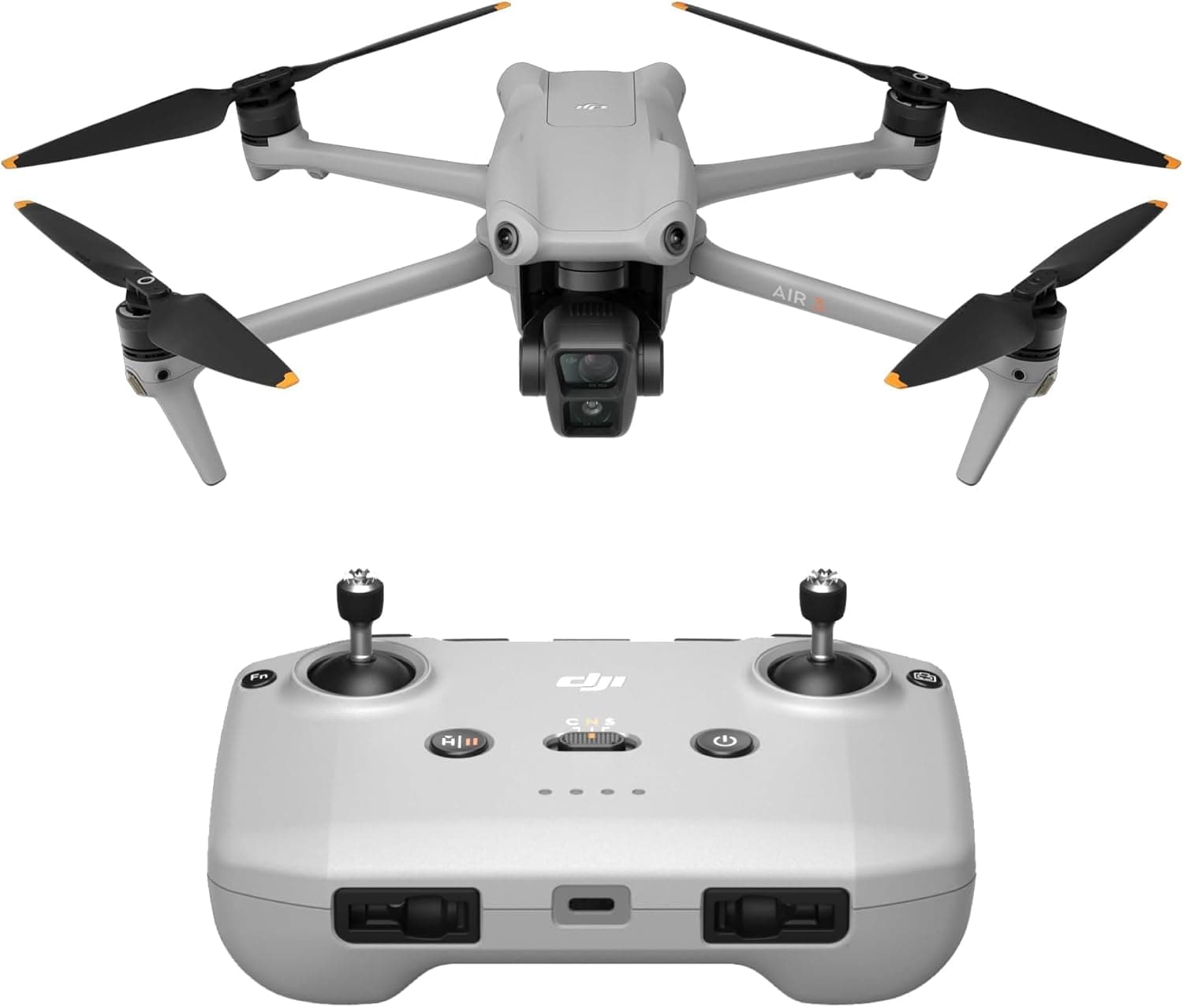
DJI Air 3 with RC-N2, featuring dual primary cameras and 4K/60fps HDR video for versatile cinematic travel shooting.
Price range: See on Amazon
What we liked
- + Dual primary cameras keep quality consistent when switching between wide and tele
- + 4K/60fps HDR footage captures motion smoothly with strong highlight detail
- + Air series size balances image quality with a travel-friendly footprint
Trade-offs
- - Air 3S has since added a larger sensor, so this model is a step behind
- - RC-N2 needs a phone mounted as the screen during every flight
A dual camera system built for variety
The DJI Air 3 pairs two matched 1/1.3-inch CMOS sensors, a wide angle lens and a 3x medium tele lens, both capable of 48MP stills and video up to 4K at 100fps, according to DJI's published specs. Having two primary cameras rather than one wide lens with digital zoom means image quality stays consistent whether shooting the wide establishing shot or the tighter tele framing, a real advantage for travel and event style shooting where switching focal length quickly matters. That consistency is the Air 3's signature feature and the reason it remains a relevant option in DJI's lineup even after newer models arrived.
4K/60fps HDR and color options
Both cameras support 4K video at up to 60fps with HDR, using dual native ISO to produce richer detail in high contrast scenes without the harsh clipping simpler sensors show in bright skies or deep shadows. For editors who want more control in post, both lenses also shoot 10-bit D-Log M and 10-bit HLG, with D-Log M preserving more highlight and shadow detail for color grading and HLG offering a higher dynamic range look without needing to grade at all. That flexibility puts the Air 3 in a genuinely capable spot for creators who want cinematic footage without stepping up to the cost of a Mavic series drone.
Flying with the RC-N2 controller
This bundle pairs the drone with the RC-N2 controller, which does not have a built in screen and instead relies on a mounted phone running the DJI Fly app for the live feed and settings. That keeps the controller itself lighter and cheaper than DJI's screen equipped RC or RC Pro controllers, but it means a charged phone is required every flight and screen visibility in bright sunlight depends on the phone's own brightness rather than a purpose built sunlight readable display. Flight time is rated at up to 46 minutes, a meaningful jump over the previous Air generation, and video transmission through DJI's O4 system reaches up to 20km with 1080p60 live feed quality.
Where the Air 3 sits against newer and pricier options
DJI has since released the Air 3S, which keeps the dual camera concept but upgrades the wide lens to a larger 1-inch sensor for better low light and dynamic range, and it now outranks this Air 3 in this guide's cinematic drone comparison. Against the Mavic 3 Pro and Mavic 3 Pro Cine at the top of that same ranking, the Air 3 trades a third camera lens and higher end video codecs for a smaller, lighter, notably less expensive package that is easier to travel with. For most travel and hobbyist cinematic shooters, the size and weight savings against Mavic tier drones are a fair trade for the missing third lens.
Verdict and who should pick something else
The DJI Air 3 remains a strong pick for anyone who wants two matched cameras, HDR 4K video and a travel friendly size without paying Mavic series prices, and the dual lens setup still holds up well against most competitors outside DJI's own newer models. Buyers chasing the best possible low light and dynamic range performance should look at the Air 3S with its larger sensor, and anyone who wants a screen built into the controller rather than relying on a phone should budget for the RC 2 version instead of this RC-N2 bundle. For most everyday cinematic and travel use, this remains a well rounded choice.
Frequently asked questions
Does the Air 3 need a phone to fly?
Yes, the RC-N2 controller in this bundle has no built in screen, so a phone running the DJI Fly app is needed for the live feed and settings.
How is this different from the Air 3S?
The Air 3S upgrades the wide camera to a larger 1-inch sensor for improved low light and dynamic range, while this Air 3 uses two smaller 1/1.3-inch sensors.
What is the maximum flight time?
DJI rates the Air 3 at up to 46 minutes per battery under ideal conditions.
Can both cameras shoot in HDR?
Yes, both the wide and tele cameras support 4K at up to 60fps with HDR, plus 10-bit D-Log M and HLG color modes.
Prices change often, so check the current price and availability on Amazon.
Check price on AmazonDrone FPV Lab may earn a commission from the link above.