DJI Air 3S Fly More Combo (RC 2), 4K Drone, 1-inch CMOS Review (2026)
Updated September 14, 2026 · Research-based review
Our verdict
The DJI Air 3S Fly More Combo with the RC 2 controller suits pilots who want a screen built into the remote and extra batteries ready for a full day of filming. The 1-inch CMOS sensor is the standout strength for dynamic range, while the trade-off is a larger, heavier package than DJI's Mini series.
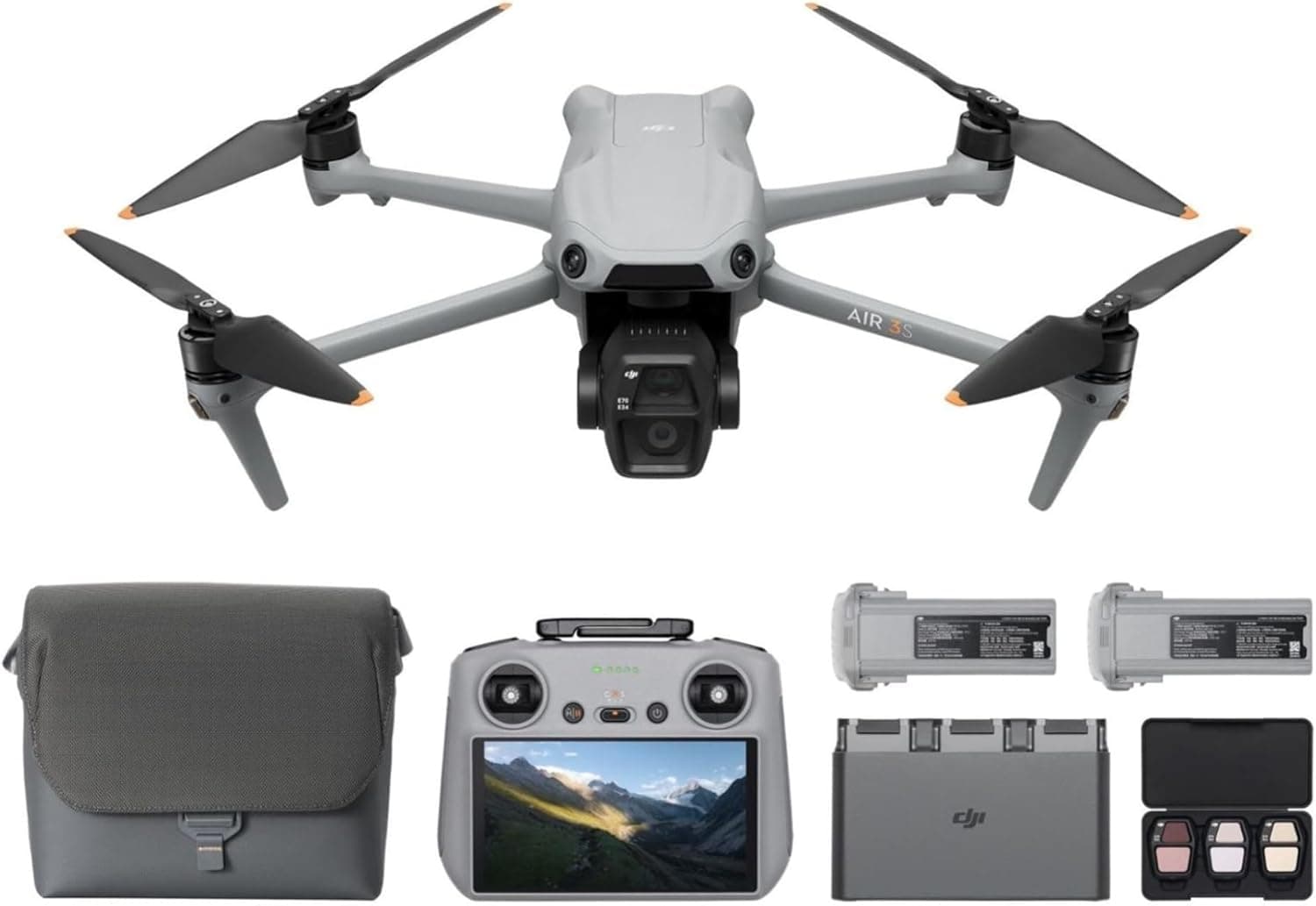
DJI Air 3S Fly More Combo with RC 2, a 4K drone with a 1-inch CMOS sensor for travel-sized cinematic footage.
Price range: See on Amazon
What we liked
- + 1-inch CMOS sensor handles sunsets and low light far better than small-sensor drones
- + RC 2 controller has a built-in screen, so setup at a location is quick
- + Fly More Combo adds extra batteries for longer filming sessions
Trade-offs
- - Bigger and heavier than DJI Mini drones, so it is less pocketable
- - Combo with RC 2 costs noticeably more than the RC-N3 version
Who this drone combo is for
This combo is built for pilots who want cinematic quality video without stepping up to DJI's larger Mavic line, and who prefer a controller with its own screen rather than clipping in a phone before every flight. According to DJI's official specifications, the Air 3S uses a dual camera system with a 1-inch CMOS wide sensor and a smaller telephoto sensor, giving flexibility between wide landscape shots and closer framing without physically moving the drone. The Fly More Combo bundles extra batteries, which matters for anyone planning a full day of location shooting rather than short backyard flights. Pilots who prioritize the smallest, lightest possible travel drone should look at DJI's Mini series instead, since the Air 3S is noticeably larger and heavier.
Specs and design in plain English
DJI's official specs list a 50 megapixel 1-inch CMOS primary sensor with an f/1.8 aperture alongside a 48 megapixel 1/1.3-inch medium telephoto sensor at f/2.8, with 4K video available up to 60fps in standard modes and higher frame rates for slow motion. DJI states up to 45 minutes of flight time per battery and an O4 transmission system rated for a 20 kilometer range under FCC rules, along with omnidirectional obstacle sensing that combines binocular vision with forward-facing LiDAR and an infrared sensor. The RC 2 controller included in this combo has its own built-in screen, letting pilots see the live feed and menus without needing to attach a phone, which speeds up setup at a new location.
Flying it and living with it
Because the RC 2 controller has its own display, setup at a filming location is faster than screen-less remotes, since there is no phone cable to connect or app permissions to grant before takeoff. The dual camera system means switching between the wide 1-inch sensor and the telephoto lens happens in the DJI Fly app without landing, which is useful for varying a shot list during a single flight. The Fly More Combo's extra batteries extend a filming session well past what a single battery allows, though DJI's obstacle sensing, while extensive, should still be treated as a backup rather than a replacement for careful flying near trees, wires or buildings.
Trade-offs and how it compares
Against the DJI Air 3S with the RC-N3 controller, the same aircraft and camera system at a lower price, the RC 2 version in this combo adds a built-in screen at extra cost, so buyers who are comfortable using a phone as the display can save money by choosing the RC-N3 combo instead. Stepping up to the DJI Mavic 3 Pro brings a third camera and DJI's Hasselblad partnership for even stronger image quality, at a meaningfully higher price and larger size. Against DJI's own Mini series, the Air 3S trades pocketability for the bigger 1-inch sensor and longer transmission range, which is the core trade-off buyers are making by choosing this size class at all.
Verdict and who should pick something else
For pilots who want a screen equipped controller ready to go without a phone, plus enough batteries in the box for a full shoot day, this Fly More Combo with RC 2 is a strong choice built around DJI's larger 1-inch sensor. Buyers on a tighter budget who do not mind using their phone as the display should compare pricing against the RC-N3 version of the same Air 3S combo before deciding. Anyone who needs the smallest, most travel friendly drone in DJI's current lineup should look at the Mini series instead, since the Air 3S is a meaningfully bigger and heavier aircraft than DJI's sub 249g models.
Frequently asked questions
What is the difference between the RC 2 and RC-N3 controllers?
The RC 2 included in this combo has a built-in screen, so no phone is needed, while the RC-N3 requires clipping in a phone as the display; both control the same Air 3S aircraft.
How many cameras does the DJI Air 3S have?
It has two: a 50 megapixel 1-inch CMOS wide camera and a 48 megapixel 1/1.3-inch medium telephoto camera, according to DJI's official specifications.
How long can the DJI Air 3S fly on one battery?
DJI lists up to 45 minutes of flight time per battery under controlled conditions; real world flight time is typically shorter depending on wind and flying style.
What does the Fly More Combo add over the standard package?
The Fly More Combo bundles extra flight batteries, extending total flying time across a session compared with buying the aircraft with a single battery.
Prices change often, so check the current price and availability on Amazon.
Check price on AmazonDrone FPV Lab may earn a commission from the link above.