DJI Mavic 3 Pro with RC, Triple-Camera Drone, Hasselblad 4K Camera Review (2026)
Updated September 14, 2026 · Research-based review
Our verdict
DJI's flagship Hasselblad triple camera drone, built for pilots who want the widest creative range in a single flight, wide, medium tele and tele framing without swapping gear. Image quality and flight polish lead the category, at the cost of a heavier airframe, tighter registration rules and no ProRes on this non-Cine version.
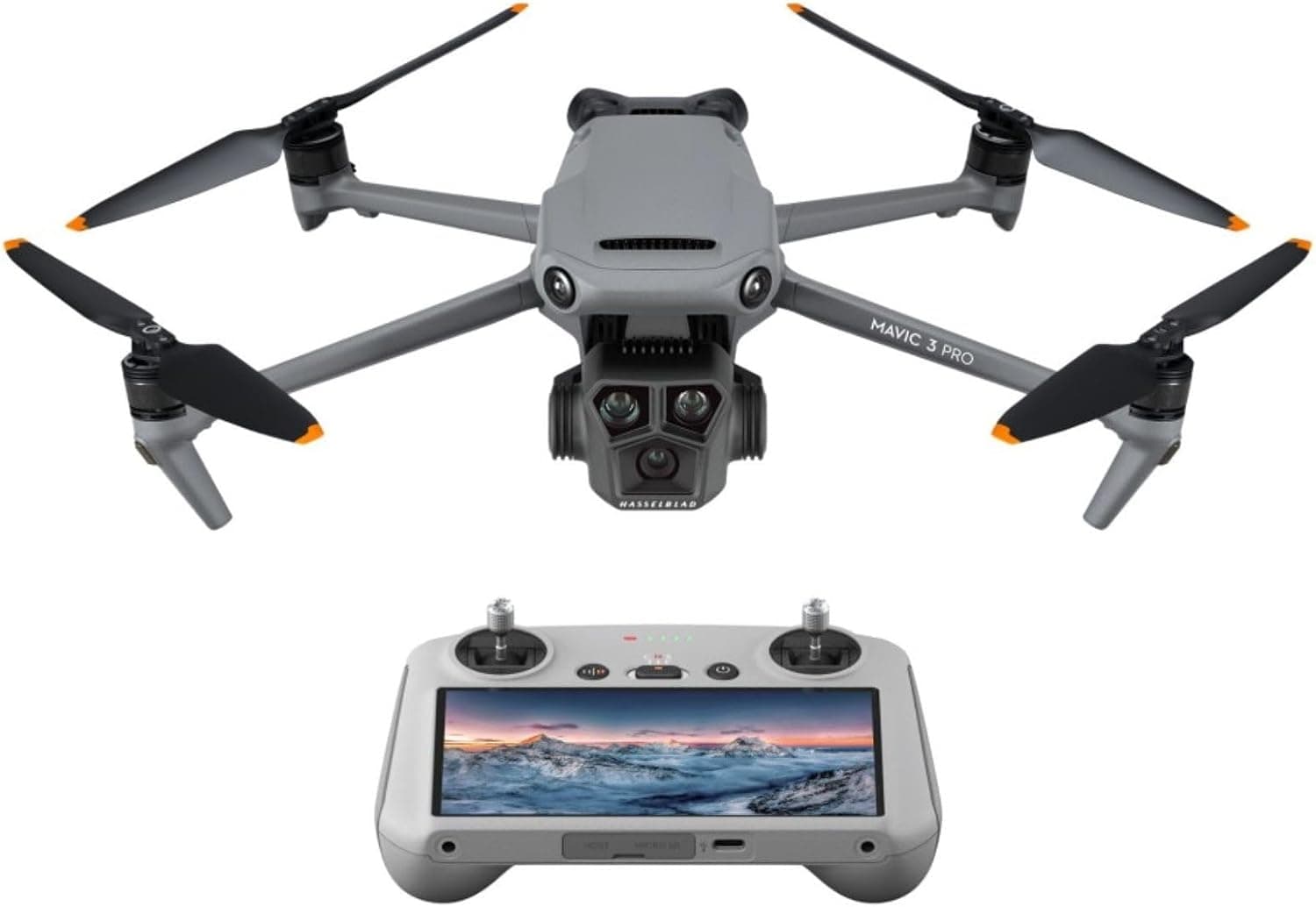
DJI Mavic 3 Pro with RC, a triple-camera drone led by a Hasselblad 4K camera for serious aerial photography.
Price range: See on Amazon
What we liked
- + Hasselblad main camera produces rich color and detail for landscape shooting
- + Triple cameras give wide, medium and tele framing from one flight
- + Standard RC controller keeps cost below the Cine and RC Pro bundle
Trade-offs
- - Large premium drone, so it weighs more and is subject to stricter registration rules
- - No ProRes recording on the non-Cine version, which limits high-end grading
Who the Mavic 3 Pro is really built for
This is a drone aimed at photographers, videographers and serious hobbyists who want professional grade aerial imagery without stepping up to an enterprise platform. Three separate cameras, a Hasselblad main lens, a medium tele and a tele camera, cover wide establishing shots through to compressed telephoto framing in one flight, which is the drone's defining advantage over single camera competitors. That versatility comes with size and weight that puts it well above the sub 249 gram class, so buyers should expect stricter registration and airspace rules in most regions compared with a mini drone. Casual users who mainly want quick clips for social media are better served by a lighter, simpler model, while anyone building a serious photography or filmmaking kit will get genuine creative range from the triple lens setup.
Camera system, flight time and transmission
According to DJI's official specifications, the Hasselblad main camera uses a 4 thirds CMOS sensor at 20 megapixels with a 24mm equivalent lens and a variable f 2.8 to f 11 aperture, paired with a 1 1.3 inch 48 megapixel medium tele camera at 70mm equivalent and a 1 2 inch 12 megapixel tele camera reaching 166mm equivalent. That spread lets a pilot recompose a shot without repositioning the aircraft. DJI lists a maximum flight time of 43 minutes under controlled conditions, and the O3 Plus transmission system reaches up to 15 kilometers under FCC rules in open, interference free conditions, though real world range will be shorter around buildings or in congested radio environments. Total weight sits at 958 grams for the standard version.
Living with a premium camera drone
Setup follows DJI's familiar app based workflow, binding the RC controller, registering the aircraft where required and running a firmware update before the first flight. Omnidirectional obstacle sensing, with forward detection effective from roughly 0.5 to 20 meters at flight speeds up to 15 meters per second, adds a meaningful safety margin while framing shots near trees or structures, something buyers moving up from a smaller drone will notice immediately. Because this configuration ships with the standard RC controller rather than the RC Pro, day to day flying is done through the built in screen on the controller itself rather than a paired tablet, which keeps the kit simpler to carry. Owners should still budget for spare batteries and a capable memory card given the resolution of footage the triple camera system produces.
Trade-offs against the Cine version and lighter rivals
The clearest trade-off on this non-Cine configuration is video codec support, since ProRes recording and the larger internal storage that comes with it are reserved for the pricier Mavic 3 Pro Cine bundle with the RC Pro controller, which matters for editors doing heavy color grading but is unnecessary for most other shooters. Compared with DJI's own Air 3S and Mini class drones, the Mavic 3 Pro trades portability and the lightest registration category for a larger sensor, longer tele reach and the Hasselblad color science that photographers specifically seek out. Pilots who prioritize packability and a simpler one or two camera setup should look toward the Air 3S, while this model rewards those who value maximum image quality and framing flexibility over travel convenience.
Verdict and who should choose differently
The Mavic 3 Pro earns our score of 9.4 out of 10 by combining a genuinely versatile triple camera system with DJI's mature flight software, strong obstacle sensing and a 15 kilometer capable transmission system, making it one of the most capable camera drones a hobbyist or working creator can buy without moving into enterprise hardware. The trade-offs are real though, its 958 gram weight brings tighter local rules than a sub 249 gram drone, and shooters who need ProRes footage will need the Cine bundle instead. Anyone prioritizing a light travel drone or a lower entry cost should consider DJI's Air or Mini lines, while this model suits pilots who want the best available image quality and are prepared to register and fly a larger aircraft.
Frequently asked questions
How much does the Mavic 3 Pro weigh?
DJI lists the standard version at 958 grams, well above the sub 249 gram category, so check your local drone registration rules before flying.
Does this version support ProRes video?
No. ProRes recording and the expanded internal storage that supports it are exclusive to the Mavic 3 Pro Cine bundle with the RC Pro controller.
What is the maximum flight time and transmission range?
DJI rates the aircraft for up to 43 minutes per flight, with the O3 Plus transmission system reaching up to 15 kilometers under FCC conditions in open, interference free environments.
What cameras does the triple system include?
A 20 megapixel Hasselblad 4 thirds main camera, a 48 megapixel medium tele camera at 70mm equivalent, and a 12 megapixel tele camera reaching 166mm equivalent.
Prices change often, so check the current price and availability on Amazon.
Check price on AmazonDrone FPV Lab may earn a commission from the link above.