RunCam Phoenix 2 Nano FPV Camera 1000TVL 1/2 CMOS 2.1mm FOV 155 Review (2026)
Updated September 20, 2026 · Research-based review
Our verdict
The RunCam Phoenix 2 Nano suits whoop and micro quad builders who want a genuinely large sensor in a tiny shell. Its 1/2 inch CMOS and wide 2.1mm lens deliver a bright, clean image, though 1000TVL trails newer rivals and the nano size needs the right frame mount.
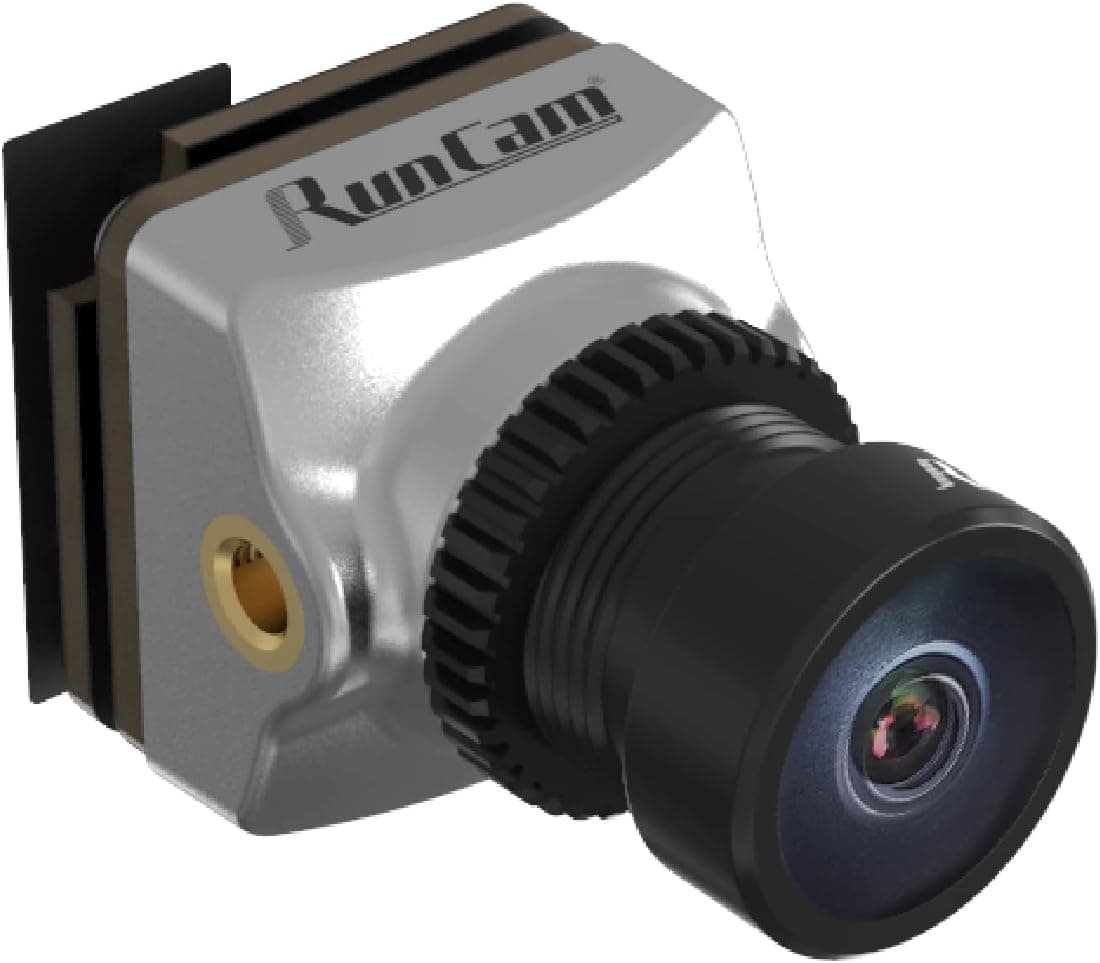
RunCam Phoenix 2 Nano FPV camera with 1000TVL, a 1/2 CMOS sensor and 2.1mm lens with 155 FOV for small builds.
Price range: See on Amazon
What we liked
- + 1/2 CMOS sensor is large for a nano camera, so image quality holds up well
- + 155 FOV lens gives a wide freestyle view for flips and dives
- + Nano size fits micro and whoop-style frames with limited space
Trade-offs
- - Nano cameras need the right mount or adapter for larger frames
- - 1000TVL is lower than some rival cameras in this guide
Sensor and image quality
The Phoenix 2 Nano uses the same CPU and 1/2 inch CMOS sensor as the full-size RunCam Phoenix 2, which is unusually large for a camera this small. RunCam rates the output at 1000TVL with a signal to noise ratio above 50dB when automatic gain control is off, and the camera supports Global WDR to balance bright sky against dark ground in the same shot. Minimum illumination is listed at 0.001 lux at f1.2, which points to solid low light behavior for an analog camera. Image tuning is handled entirely through the OSD menu accessed over the standard control cable, so pilots can switch between color, black and white, and an EXT input mode without opening the case. The 7 layer glass lens with an f2.0 aperture is built to cut down on red flare and purple fringing around bright light sources during outdoor flights.
Lens and field of view
This version ships with a fixed 2.1mm M8 lens rated at 155 degrees FOV in 4:3 mode, which is a wide freestyle angle that keeps gates, trees, and the horizon in frame during fast flips and dives. Screen format switches between 4:3 and 16:9 to match whichever goggles or DVR a pilot is running, and the video system itself toggles between PAL and NTSC from the same menu. Because the lens is fixed rather than swappable, buyers should confirm 155 degrees suits their flying style before ordering, since racers who prefer a narrower, more zoomed view may want a different Phoenix 2 variant with a tighter lens instead of this nano wide angle option.
Size, mounting and build
RunCam lists the Phoenix 2 Nano at 14mm by 14mm by 22mm and just 5 grams, dimensions aimed squarely at whoop frames and micro builds where every gram and millimeter counts. The housing is ABS plastic rather than metal, which keeps weight down but means the camera relies on the frame's canopy or mount for crash protection rather than its own shell. Because nano cameras use a nonstandard mounting footprint compared to full-size or mini cameras, builders moving this camera into a larger 5 inch frame will likely need an adapter plate or 3D printed mount rather than a direct swap, which is worth planning for before the build.
Power, wiring and compatibility
The camera accepts a wide 5 to 36 volt input, so it can run directly from a 2S to 6S main battery pad on most flight controllers without a separate regulator, and RunCam lists current draw around 190mA at 5V or 80mA at 12V. That flexibility makes it easy to wire into existing micro quad builds that already share power rails between the camera, VTX, and flight controller. The trade-off with any nano format camera is that connector pads are small and closely spaced, so soldering requires a steady hand and fine tip iron, and pilots who are not comfortable with small solder joints may want to budget extra time or ask a shop to install it.
Who it's for and value
Against the rivals in this guide, the Phoenix 2 Nano sits in the middle of the pack on resolution, since several competing micro cameras now push past 1200TVL, but its larger 1/2 inch sensor and Global WDR are genuine advantages for pilots flying in mixed light. It is best suited to builders who are prioritizing whoop or micro frame size over chasing the highest TVL number on paper, and who want a camera that shares its core imaging hardware with a proven full-size model. Anyone building a larger 5 inch freestyle rig will likely get more resolution per dollar from a mini or standard-size camera instead.
Frequently asked questions
Does the RunCam Phoenix 2 Nano work with 6S batteries?
Yes, RunCam lists an input range of 5 to 36 volts DC, which covers typical 2S through 6S main battery pads on a flight controller.
Can I change the lens on the Phoenix 2 Nano?
This nano version ships with a fixed 2.1mm 155 degree lens, so it is not a user-swappable lens system like some larger Phoenix 2 variants.
Will the Phoenix 2 Nano fit a 5 inch freestyle frame?
It can, but because it uses a nano-size mounting footprint you will likely need an adapter plate or printed mount rather than a direct bolt-in fit.
Is 1000TVL enough for freestyle flying in 2026?
It is workable and the large 1/2 inch sensor and Global WDR help image quality, though several newer micro cameras now offer higher TVL ratings for a sharper picture.
Prices change often, so check the current price and availability on Amazon.
Check price on AmazonDrone FPV Lab may earn a commission from the link above.