Radiomaster Pocket ELRS Remote Controller Portable Hall Gimbal EdgeTX Transmitter Review (2026)
Updated September 21, 2026 · Research-based review
Our verdict
The RadioMaster Pocket ELRS suits pilots who want a full EdgeTX radio that fits in a small FPV bag next to goggles and a couple of quads. Hall gimbals and built-in ELRS are the main strengths, while the shorter stick throws trade off some fine control for that portability.
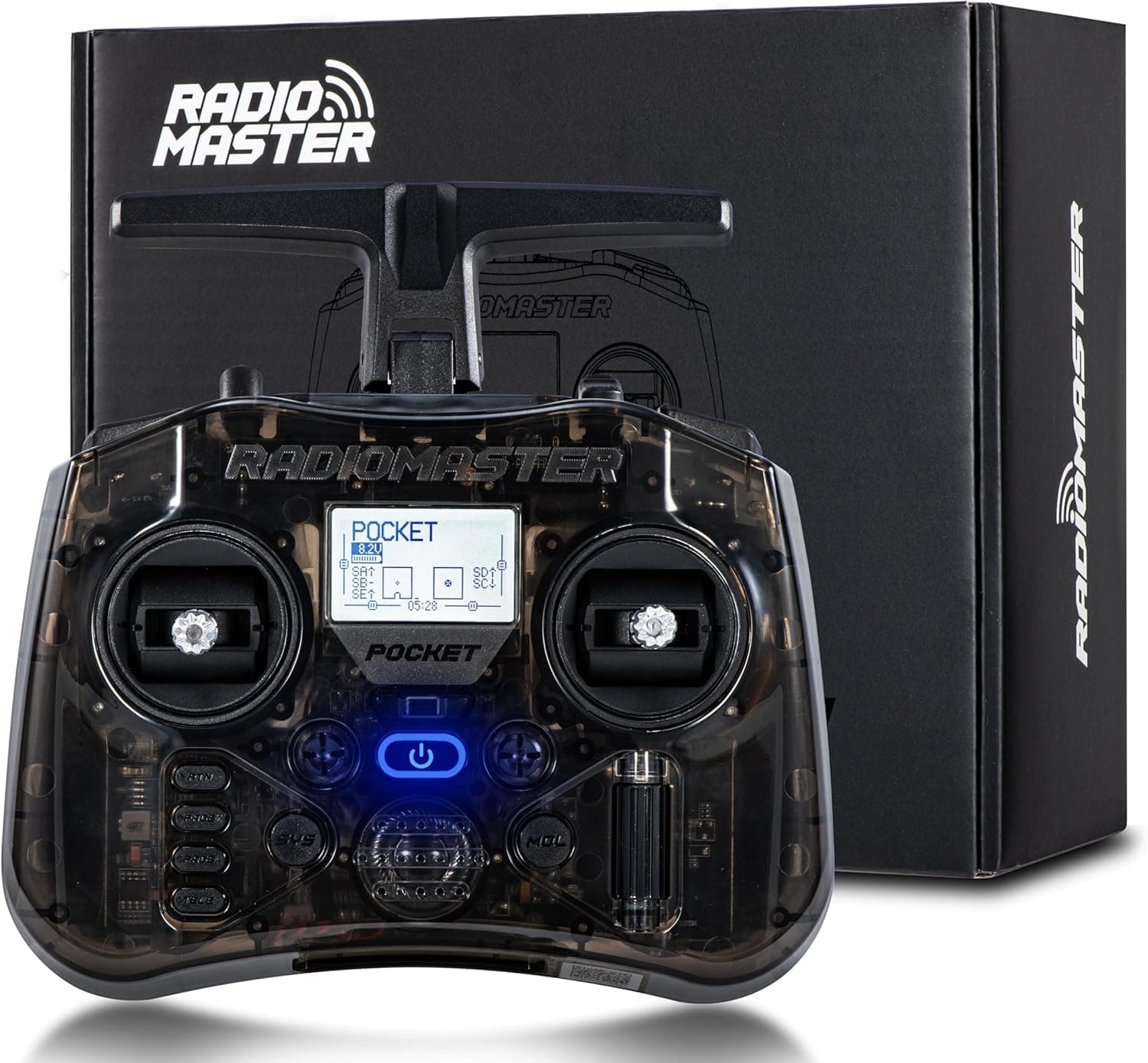
Radiomaster Pocket ELRS remote with hall gimbals and EdgeTX, a portable transmitter that slips into a small FPV bag.
Price range: See on Amazon
What we liked
- + Compact Pocket size is easy to carry alongside goggles and a few quads
- + Hall gimbal sticks resist wear and keep centering accurate
- + ELRS and EdgeTX give a modern, customizable radio at an entry price
Trade-offs
- - Smaller sticks and shorter throws feel less precise than a full-size radio
- - Limited switch count compared with larger Radiomaster transmitters
Who it is for
The Pocket is built for pilots who travel light, whether that means a backpack session at the local park or a full bag carried through airport security on the way to a group freestyle meet. It folds down to a case roughly the size of a large phone, so it slots next to goggles, a battery charger, and two or three quads without needing a separate radio bag. Because it runs EdgeTX out of the box, it appeals to anyone who already knows the OpenTX or EdgeTX menu system from a larger transmitter and wants a matching second radio rather than learning a new interface. New pilots who plan to grow into mixing scripts, telemetry screens, or Lua widgets later will also find it a reasonable starting point, since the software ceiling is the same as on full-size Radiomaster radios even though the body is smaller.
Build and controls
Radiomaster fits the Pocket with hall effect gimbals rather than the cheaper potentiometer sticks found on some entry radios, which matters for a compact transmitter because hall sensors resist the wear and center drift that short, frequently used sticks are prone to. The shell folds around the antenna for storage and unfolds for flying, with removable stick ends that can pack flatter or swap for a different feel. A monochrome LCD handles the menu system, and built-in LED lighting under the switches helps pilots glance down and confirm switch position without hunting for a physical detent in dim light. The frame runs on two 18650 cells that the buyer supplies, which keeps the unit lighter in shipping but means budgeting for batteries and a charger separately.
Range and protocol
ExpressLRS is built directly into the Pocket rather than added as a module, so it binds straight to ELRS receivers on 2.4GHz without buying extra hardware. The built-in ELRS radio tops out at a lower maximum output than the internal modules on larger Radiomaster transmitters, which is the expected tradeoff for a pocket-sized board and antenna, and it is plenty for typical park and field flying distances. Channel count tops out at sixteen depending on the receiver in use, which covers a standard freestyle or racing setup with flight modes, arming, and a handful of auxiliary switches with room to spare. EdgeTX firmware means the radio can also be updated and reconfigured as ExpressLRS firmware improves, so the protocol side of the radio is not fixed at the day of purchase.
Where it falls short
The compromise for the small shell is stick throw. Gimbal travel on the Pocket is shorter than on a full-size Boxer or Zorro style radio, and pilots coming from a larger transmitter often notice they need finer finger movements to hit the same control resolution, particularly on pitch and roll during precision freestyle lines. Switch count is also reduced compared with larger Radiomaster radios, so pilots who like to assign a dedicated switch to every flight mode, turtle mode, and buzzer function may need to double up functions on fewer switches or rely on momentary buttons instead. Neither issue affects binding or flight safety, but they are the reason the Pocket reads as a secondary or travel radio rather than a full replacement for a primary transmitter.
Bottom line
For the price, the Pocket packs a hall gimbal EdgeTX radio with built-in ELRS into a shell that actually disappears into a gear bag, which is the point of the product. It is not trying to out-feature a full-size Boxer or TX16S, and pilots who fly competitively or spend hours a day at the sticks will likely still prefer a larger radio as their main transmitter. As a travel backup, a gift for a new pilot, or a compact primary for someone who only flies casual freestyle, it delivers a modern open-source radio experience without the bulk, and the hall gimbals mean it should hold up to regular use better than cheaper pocket radios with potentiometer sticks.
Frequently asked questions
Does the RadioMaster Pocket need a separate ELRS module?
No, ExpressLRS is built into the transmitter, so it binds to ELRS receivers on 2.4GHz without adding an external module.
What batteries does the Pocket use?
It runs on two 18650 lithium cells, which are not included and need to be bought separately along with a charger.
Is the Pocket a good first radio for a beginner?
It can be, especially for someone who wants EdgeTX and ELRS from the start, though the shorter stick throws and fewer switches suit casual flying more than dense competitive setups.
Can the Pocket be used alongside a larger Radiomaster transmitter?
Yes, many pilots use it as a compact travel radio while keeping a full-size Boxer or similar transmitter as their primary, since both run EdgeTX and feel familiar to switch between.
Prices change often, so check the current price and availability on Amazon.
Check price on AmazonDrone FPV Lab may earn a commission from the link above.