Radiomaster Boxer Max Version CNC AG01 Hall Gimbals Carbon Fiber 2.4G 16ch ELRS Mode 2 Review (2026)
Updated September 20, 2026 · Research-based review
Our verdict
The Boxer Max with AG01 hall gimbals suits experienced FPV pilots who want race-grade stick feel and a premium carbon fiber build in an ELRS radio. Its main strength is the CNC-milled hall gimbal set, and its main trade-off is a higher price than the standard Boxer for upgrades that matter most to advanced pilots.
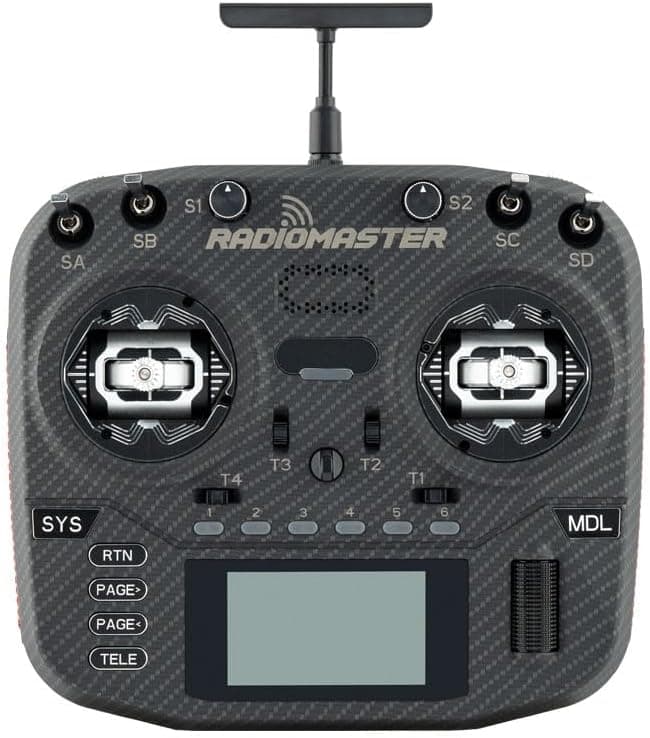
Radiomaster Boxer Max with CNC AG01 hall gimbals and carbon fiber trim, a 2.4G 16ch ELRS Mode 2 premium radio.
Price range: See on Amazon
What we liked
- + AG01 CNC gimbals give very smooth, precise stick movement for pro pilots
- + Carbon fiber detailing adds a premium feel and sturdy build
- + ELRS Mode 2 means fast, long range control for current quads
Trade-offs
- - Max version costs noticeably more than the standard Boxer
- - Upgraded gimbals matter most to experienced pilots, not beginners
Who the Boxer Max is for
The Boxer Max is aimed at pilots who already understand what they want from a transmitter and are ready to pay more for refined stick feel rather than buying a first radio. RadioMaster positions the AG01 gimbal set inside the Boxer Max as a performance upgrade over the standard hall gimbals found on the base Boxer, so the target buyer is typically someone racing, freestyling, or otherwise flying often enough to notice small differences in gimbal smoothness and centering. Beginners just learning to fly can absolutely use this radio, but they are unlikely to notice the difference the AG01 gimbals make compared to a less expensive hall gimbal radio, since that sensitivity to stick feel tends to develop with flight time. Pilots upgrading from an older or lower-tier transmitter looking for a noticeable jump in precision are the clearest fit.
AG01 gimbal design
The AG01 gimbals use non-contact hall effect sensors rather than physical potentiometers, which avoids the wear and signal drift that potentiometer-based gimbals can develop over years of use. RadioMaster describes the gimbal housings as fully CNC milled from billet aluminum, paired with quad ball bearings intended to deliver a smooth, precise feel through the stick's full range of motion. Front-accessible tension and travel adjustment screws let pilots fine-tune spring resistance and stick throw without opening the radio case, which makes it easier to dial in preferences at the field rather than only at a workbench. RadioMaster states the gimbals were developed and tested with input from professional pilots over an extended development period, which lines up with their positioning as a racing-focused upgrade part.
Build quality and materials
Carbon fiber trim panels give the Boxer Max a distinct look compared to the plastic-bodied base Boxer and reinforce the impression of a premium product built for pilots who want their gear to feel as capable as it flies. The included Sticky360 gimbal stick ends use a dual-ring, non-slip design machined from aviation grade aluminum, intended to keep fingertips locked onto the sticks during fast, sweaty racing sessions rather than slipping during a critical maneuver. Overall fit and finish on the Max version is aimed squarely at pilots who handle their radio daily and want it to hold up to frequent transport and use, rather than a radio that mostly sits on a shelf between occasional flights.
Radio protocol and range
This version of the Boxer Max runs ExpressLRS, the open-source long range protocol widely used across current FPV builds for its combination of low latency and strong range performance. Operating on the 2.4GHz band with support for up to 16 channels, it covers the control needs of nearly any FPV quad build, from small freestyle frames to longer range setups. Because ELRS is an active, community-maintained protocol with regular firmware updates, pilots benefit from ongoing improvements to range and reliability without needing new hardware, though it does mean staying current with firmware updates to get the best performance and compatibility with newer receivers.
Value versus the standard Boxer
The Max version costs noticeably more than the standard Boxer, and that price gap is almost entirely the AG01 gimbal upgrade plus the carbon fiber cosmetic trim, since the core radio functions and ELRS protocol are shared across both versions. For a pilot who cannot yet tell the difference between hall gimbal grades, that extra cost buys comfort and future-proofing more than an immediate, obvious improvement in flying. For an experienced pilot who has flown enough radios to feel gimbal quality directly in their results, the AG01 upgrade is often considered worth paying for, since gimbal feel is one of the few parts of a radio that is difficult to upgrade after purchase without significant extra work.
Frequently asked questions
What is different about the Boxer Max compared to the standard Boxer?
The Max version adds the upgraded AG01 CNC hall gimbal set and carbon fiber trim panels, while the core radio and ELRS protocol are the same.
Does the Boxer Max use ExpressLRS?
Yes, this version runs ExpressLRS on 2.4GHz with support for up to 16 channels.
Are hall effect gimbals more durable than potentiometer gimbals?
Hall sensors are non-contact, so they avoid the physical wear that potentiometer-based gimbals can develop over years of stick movement.
Is the AG01 gimbal upgrade worth it for beginners?
Beginners can use the radio without issue, but the refined stick feel is most appreciated by pilots with enough flight time to notice gimbal differences.
Prices change often, so check the current price and availability on Amazon.
Check price on AmazonDrone FPV Lab may earn a commission from the link above.