5inch FPV Drone Kit F405 FC 60A ESC 2207 2400KV Brushless Motor Freestyle Racing UR26 Review (2026)
Updated September 14, 2026 · Research-based review
Our verdict
This 5-inch freestyle and racing kit, sold under the UR26 model name, pairs an F405 flight controller with a 60A ESC and 2207 2400KV motors for pilots who want to build their own loadout. It is a proven, punchy combination for the money, but it ships as a kit only, so a radio, goggles, and batteries are separate purchases.
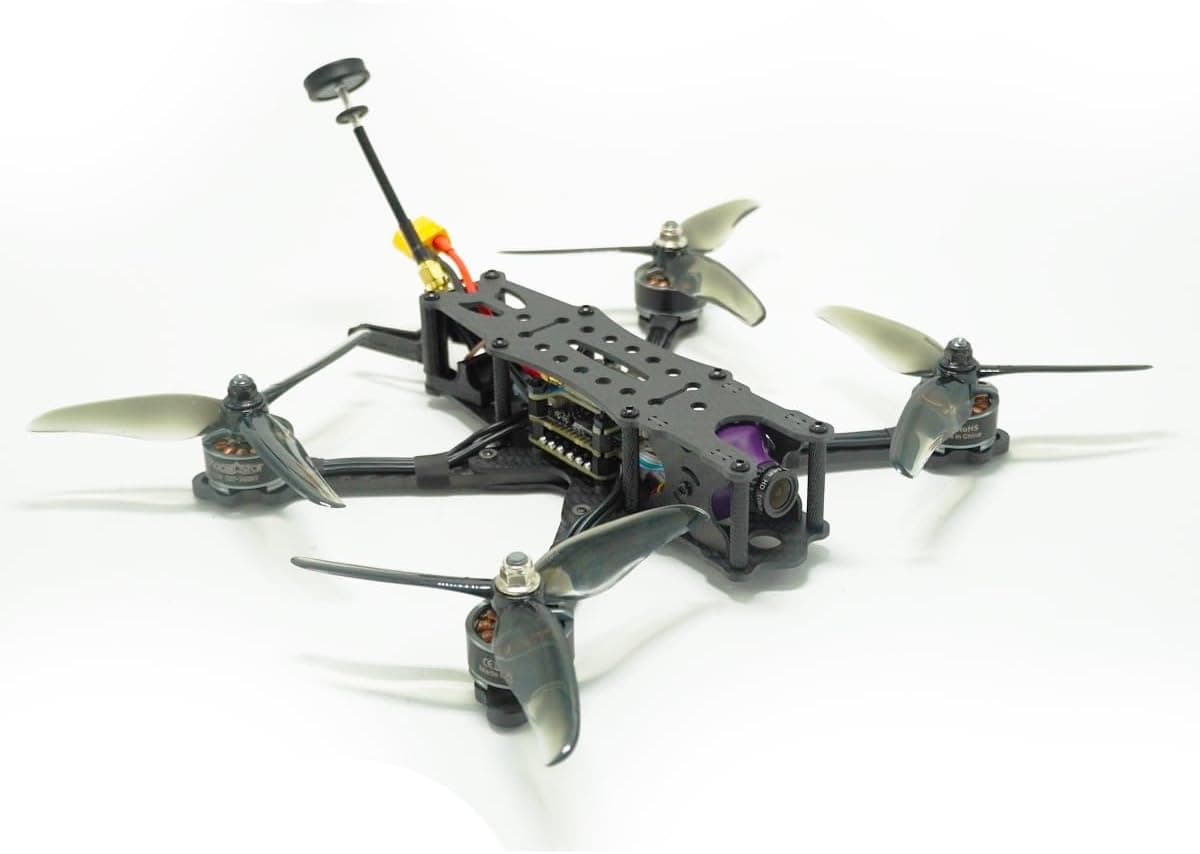
A 5inch freestyle and racing FPV drone kit with an F405 flight controller, 60A ESC and 2207 2400KV brushless motors.
Price range: $ (Budget)
What we liked
- + 2207 2400KV motors are a proven 5 inch combination with plenty of punch for racing
- + 60A ESC leaves generous current headroom, so hard throttle punches are less likely to stress it
- + F405 flight controller offers more UARTs, so adding GPS or digital video receivers is easier
Trade-offs
- - Not a ready-to-fly package, so you still need a radio, goggles and suitable LiPo packs
- - A powerful 5 inch quad is fast and unforgiving, so beginners should train in a simulator first
Who Should Pick Up This Kit
This kit is built for pilots who already have, or plan to buy separately, the radio transmitter, FPV goggles, receiver, and LiPo batteries needed to actually fly, since the box covers the airframe and electronics rather than a complete ready-to-fly package. It suits intermediate to experienced flyers who want a proven 5 inch freestyle and racing combination without paying extra for parts they may want to swap anyway, such as a specific receiver brand or video transmitter frequency. The F405 flight controller and 2207 2400KV motor pairing is a well documented setup in the FPV community, so troubleshooting guides and tuning advice are easier to find than for an obscure combination. It is a poor first purchase for someone who has never flown FPV before and does not yet own supporting gear.
Flight Controller, ESC, and Motors Explained
The F405 flight controller runs Betaflight, the same open-source firmware used across most hobby-grade FPV builds, and its extra UART ports make it easier to add accessories like GPS or a digital video system later without running out of connections. The bundled 60A ESC gives generous current headroom over the 30 to 40A ESCs found on cheaper kits, meaning hard throttle punches during racing or freestyle maneuvers are less likely to trigger thermal protection or damage the ESC. The 2207 2400KV brushless motors are a well proven size and KV rating for 5 inch propellers on 4S battery packs, delivering strong punch-out power without demanding an unusually large or heavy battery pack to reach that performance.
Building, Flying, and Maintaining the Kit
Because this ships as a kit rather than a pre-soldered ready-to-fly unit, building it involves connecting motors to the ESC, wiring the flight controller, and installing a receiver and video transmitter of your choice, which is a meaningful step up in complexity from a boxed beginner drone. New builders unfamiliar with soldering and Betaflight configuration should budget time to learn both before their first flight, and everyone flying a powerful 5 inch quad for the first time should spend time in a flight simulator first, since these builds are fast and unforgiving of mistakes. Ongoing care includes checking motor screws and frame arms after hard crashes, since freestyle and racing flying puts real stress on both.
How It Compares With Other Racing Kits
Against ready-to-fly options like the EMAX Tinyhawk and BETAFPV Cetus, which both rank higher in this racing guide and include goggles and a controller in the box, this kit demands more upfront assembly and separate purchases but rewards that effort with a larger, more powerful 5 inch platform built for open-field freestyle and racing rather than indoor micro flying. Against the SpeedyFPV ZMR250 kit, which sits lower in this same comparison, this UR26 build uses a newer F405 controller and a beefier 60A ESC against the ZMR250's F411 controller and lighter 30A ESCs, giving it more headroom for aggressive flying.
Verdict and Who Should Look Elsewhere
Pilots who already have a radio, goggles, and batteries and want a capable, well documented 5 inch airframe to build or rebuild around will get strong value here, reflected in our score of 8.0 out of 10 in this guide. Complete beginners, or anyone who wants to fly the same day the box arrives, should instead look at a ready-to-fly kit like the EMAX Tinyhawk or BETAFPV Cetus, both of which include a controller and goggles so there is nothing extra to source or assemble before a first flight.
Frequently asked questions
Does this kit include a battery or radio?
No, it is an airframe and electronics kit; a LiPo battery, radio transmitter, receiver, and FPV goggles must all be purchased separately.
Is soldering required to build this kit?
Yes, connecting the motors, ESC, flight controller, and receiver typically requires basic soldering skills common to FPV kit building.
What firmware does the flight controller use?
The F405 flight controller runs Betaflight, the widely used open-source firmware standard across most hobby FPV flight controllers.
Is this kit suitable for a first-time FPV pilot?
It is better suited to intermediate or experienced pilots, since a powerful 5 inch quad is fast and requires simulator practice before real-world flying.
Prices change often, so check the current price and availability on Amazon.
Check price on AmazonDrone FPV Lab may earn a commission from the link above.