EMAX Tinyhawk RTF Micro Indoor Racing Drone with FPV Goggles and Controller Review (2026)
Updated September 14, 2026 · Research-based review
Our verdict
EMAX's Tinyhawk RTF is a classic first FPV kit, bundling a ducted micro whoop with goggles and a controller already bound together. Its guarded frame and full kit remove the compatibility guesswork new FPV pilots face. The trade-off is short per battery flight time and a light build that struggles in wind. Our score is 8.6 out of 10.
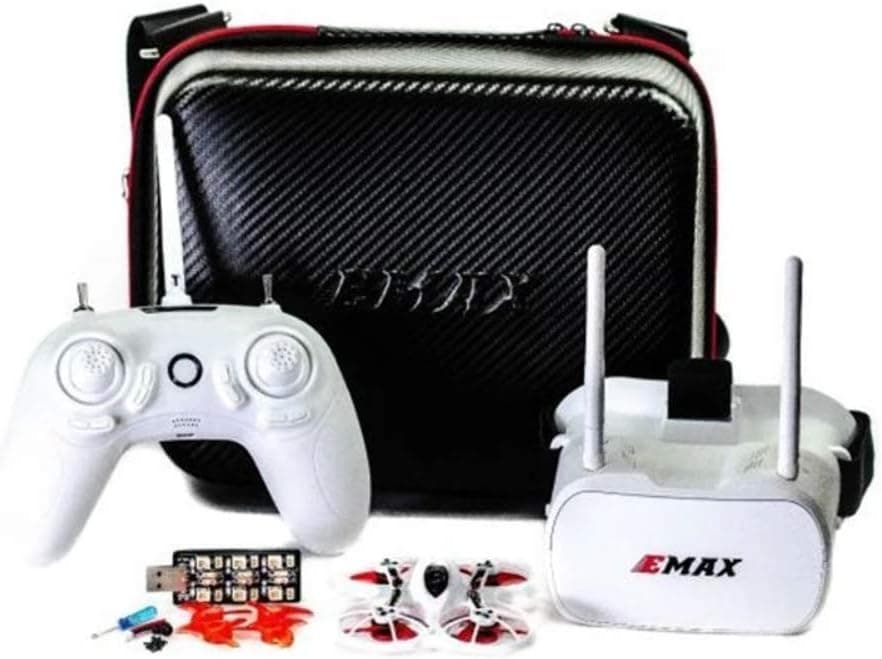
EMAX Tinyhawk RTF is a micro indoor racing whoop sold with FPV goggles and controller, a classic first FPV kit.
Price range: $ (Budget)
What we liked
- + Ducted micro frame bumps off walls and furniture, so indoor crashes rarely break anything
- + Full RTF bundle with goggles and controller means no compatibility homework before flying
- + EMAX Tinyhawk has a big community, so tutorials and spare parts are easy to find
Trade-offs
- - Short flight time per battery, so you will want extra packs for longer sessions
- - Very light build gets pushed around by wind, so outdoor racing is limited
Who the Tinyhawk RTF is built for
The Tinyhawk RTF is aimed squarely at people flying their first FPV racing drone, since EMAX bundles the drone, goggles and controller pre bound and ready to fly rather than leaving buyers to match compatible parts themselves. EMAX builds the frame from polypropylene plastic with integrated propeller guards around each of the four props, a design choice that prioritizes surviving indoor crashes into walls and furniture over raw speed or agility. That guarded, 75mm class frame makes it a sensible choice for anyone learning to fly FPV in an apartment, garage or other indoor space where clipping obstacles is part of the learning curve. Pilots who already own FPV goggles and a transmitter, or who want to fly outdoors at speed, will get more value from a bind and fly version or a larger racing frame instead of this complete beginner bundle.
Frame, motors and video system explained
EMAX lists the Tinyhawk RTF's dry weight at 29 grams on a 75mm frame, keeping it light enough that indoor collisions rarely cause real damage to the drone or its surroundings. The drone uses 8mm diameter brushless motors with ball bearings, paired with an F4 flight controller and MPU6000 gyro that EMAX designed to update fast enough for stable indoor flight despite the tiny airframe. A built in FPV camera feeds a 25 milliwatt video transmitter broadcasting 600 TVL resolution footage over a 40 channel system, enough analog video quality to fly by first person view without needing a separate camera or VTX purchase. EMAX rates top speed at up to 56 kilometers per hour, which is brisk for such a small, guarded airframe, though that top speed is really only usable in more open indoor spaces or outdoors in calm conditions.
Living with a whoop style micro racer
The kit ships with an EMAX E6 transmitter offering 6 channels over 2.4GHz and FrSky compatible protocol, plus EMAX Transporter goggles with 40 channel reception and 480 by 272 resolution, powered by an 18650 Li-Ion battery rather than disposable cells. EMAX includes the drone, goggles, controller, charger and a 1S HV 450mAh battery rated at 4.35 volts in the box, along with a carrying case and spare propellers, so a new pilot has everything needed to start flying the same day. Because the included battery is rated for only a few minutes of flight per charge, EMAX designed the kit around short, repeated flights rather than long sessions, and most Tinyhawk pilots buy several spare batteries to extend total flying time per outing. The controller ships programmed with Level, Horizon and full Acrobatic flight modes, letting new pilots start with more stabilized flight before progressing to manual control.
Trade-offs against other racing kits in the guide
In the site's racing drones guide the Tinyhawk RTF ranks first of seven, ahead of the BETAFPV Cetus FPV RTF kit, which offers a similarly complete bundle with its own LiteRadio 2 SE controller and VR02 goggles at a slightly lower score. Larger 5 inch freestyle racing kits further down the same guide trade the Tinyhawk's guarded, crash friendly frame for real outdoor speed and range, at the cost of needing more open flying space and a steeper first learning curve. The honest limitation shared by whoop class racers like the Tinyhawk is flight time, since the small 1S battery format that keeps the drone light and safe indoors also limits any single flight to just a few minutes before a swap.
Verdict and who should pick something else
The Tinyhawk RTF earns its strong score by removing the biggest barrier new FPV pilots face, which is matching a drone, goggles and controller that actually work together, and by wrapping the whole airframe in propeller guards built for indoor crashes. It suits anyone starting FPV racing from zero who wants to fly the same day it arrives. Pilots who already own compatible FPV gear should consider a bind and fly Tinyhawk instead to avoid paying for a second controller and goggles, and anyone who wants to race outdoors at real speed will outgrow this guarded micro frame quickly and should plan a larger 5 inch freestyle or racing kit as a next step.
Frequently asked questions
How long does the Tinyhawk RTF fly on one battery?
EMAX pairs the kit with a 1S HV 450mAh battery, a small format built for light weight rather than endurance, so pilots typically carry several spare batteries to extend a flying session.
Do I need to buy anything else to start flying?
No, EMAX ships the Tinyhawk RTF with the drone, goggles, controller, charger and battery already bound together, along with a carrying case and spare propellers, so it is ready to fly out of the box.
Is the Tinyhawk RTF good for outdoor flying?
It is built and guarded primarily for indoor micro racing, and its light 29 gram frame gets pushed around by wind outdoors, so calm conditions or indoor spaces suit it better than breezy outdoor flying.
What video resolution do the included goggles support?
The EMAX Transporter goggles included in the kit support 40 channel reception at 480 by 272 resolution, matching the 600 TVL analog feed from the drone's built in FPV camera.
Prices change often, so check the current price and availability on Amazon.
Check price on AmazonDrone FPV Lab may earn a commission from the link above.