DJI FPV Goggles V2 for Drone Racing Immersive Experience, Black Review (2026)
Updated September 20, 2026 · Research-based review
Our verdict
The DJI FPV Goggles V2 suit pilots who already fly, or plan to fly, DJI's digital FPV system and want a sharp, low latency headset for racing and freestyle. The main strength is the crisp digital image with an adjustable low latency mode, and the trade-off is a bulky box style design locked to DJI's own video link.
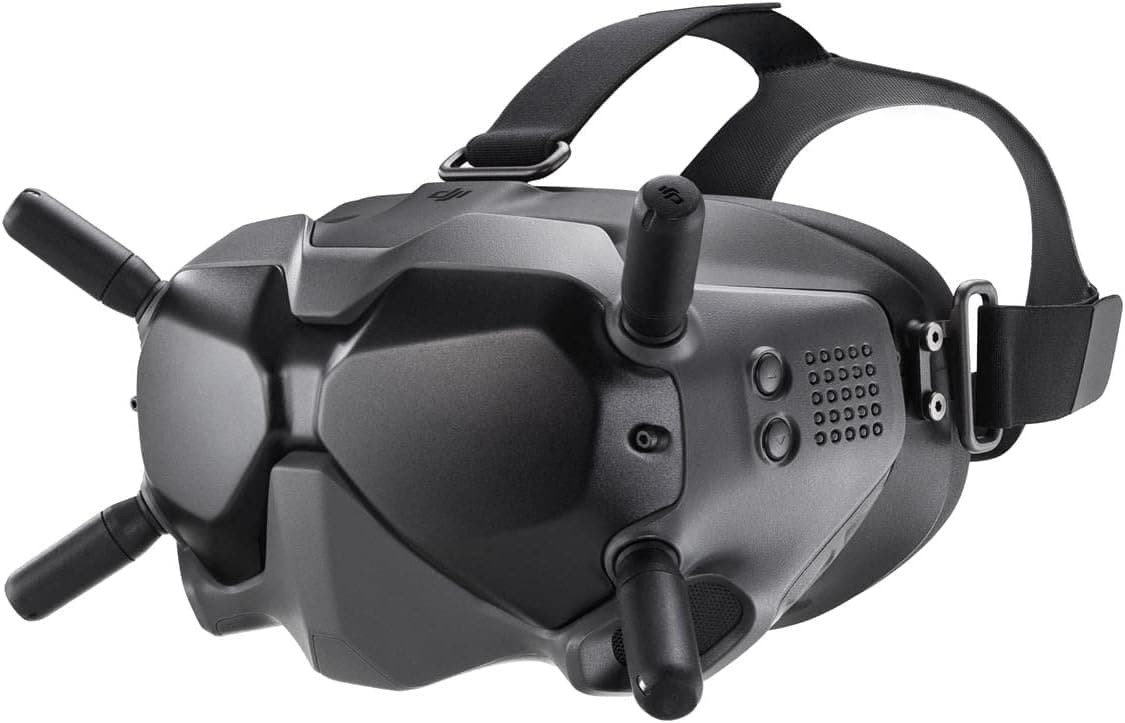
DJI FPV Goggles V2 in black, digital headset for immersive drone racing and freestyle with DJI's HD video link.
Price range: See on Amazon
What we liked
- + Digital HD image is far sharper than analog goggles, so gaps and branches are easier to read
- + V2 goggles work with the original DJI FPV drone and several DJI digital systems
- + Low latency digital feed keeps racing lines precise at speed
Trade-offs
- - Locked to DJI digital video, so analog quads need a separate receiver or goggles
- - Bulky box-style headset is heavier on the face than slim analog goggles
Who these goggles are for
The DJI FPV Goggles V2 are built for pilots flying DJI's digital HD video system, whether on the original DJI FPV drone or another DJI digital setup that shares the same link. Anyone still on analog video will need a separate receiver, since these goggles only decode DJI's own signal. That makes the V2 a strong choice for someone upgrading from analog to digital who wants a big step up in image clarity without paying for DJI's newest headset. Freestyle and racing pilots who prioritize a sharp picture over the smallest, lightest headset will likely be happy here, while pilots who fly a mix of analog and digital quads may find the single-protocol limitation frustrating during a session, since switching systems means swapping goggles entirely rather than just a receiver module.
Image quality and latency
The V2 goggles use two built-in screens with a combined resolution around 1440 by 810 pixels and a field of view that adjusts roughly between 30 and 54 degrees, letting pilots trade a wider view for a tighter, more detailed image. There are two transmission modes: a low latency mode that runs at a higher frame rate with a shorter delay, and a high quality mode that favors smoother, richer video at a slightly longer delay. Racing pilots generally prefer the low latency mode since a faster feed makes it easier to judge gaps and react to obstacles, while freestyle and cinematic flying can lean on the high quality mode. Either way, the digital image is noticeably sharper than older analog goggles, which tend to show static and color noise at distance.
Comfort and build
Compared to slim analog goggles, the V2 uses a box style shell that sits further from the face and adds bulk, which some pilots feel after long sessions or when wearing glasses underneath. The upside of that shape is more room for the internal screens and electronics, plus a sturdier housing than many lightweight analog headsets. The goggles include a head strap and rely on an included battery pack for power, giving several hours of flying time per charge before a swap or recharge is needed. Ventilation and antenna placement are built around DJI's own video module, so there is little room to customize the RF side the way pilots often do with modular analog goggle systems.
Compatibility and ecosystem
Because the V2 goggles are part of DJI's digital FPV ecosystem, they pair cleanly with the original DJI FPV drone and other DJI digital air units built for the same generation of video link, without needing separate antennas or receiver modules bought elsewhere. This closed ecosystem simplifies setup for beginners, since there is no need to research compatible antennas or diversity receivers, but it also means the goggles cannot be reused if a pilot later switches to a different digital standard from another brand. Anyone planning to build custom quads around DJI's air unit will find the V2 a natural match, while anyone mixing brands should check protocol compatibility carefully before buying.
Value versus newer DJI goggles
DJI has since released newer digital goggles with higher resolution screens and an updated video transmission system, which now sit above the V2 in DJI's lineup and generally cost more. That makes the V2 the more budget-friendly way into DJI's digital ecosystem for pilots who do not need the latest screen technology or the longest transmission range. The trade-off is that newer DJI drones and air units are increasingly built around the newest transmission standard, so buyers should confirm their drone or planned build actually supports the V2's protocol before purchasing, rather than assuming every DJI digital product is interchangeable.
Frequently asked questions
Do the DJI FPV Goggles V2 work with analog FPV drones?
No. They only decode DJI's own digital video link, so an analog quad needs a separate analog receiver or different goggles.
What is the field of view on the DJI FPV Goggles V2?
The field of view is adjustable, roughly between 30 and 54 degrees, letting pilots choose a wider or a more zoomed-in view.
Is there a low latency mode?
Yes, the goggles offer a low latency mode alongside a high quality mode, trading a bit of image smoothness for a faster response.
Are these goggles compatible with the newest DJI drones?
Compatibility depends on which video transmission standard the drone uses, so check that your drone or air unit matches the V2 before buying.
Prices change often, so check the current price and availability on Amazon.
Check price on AmazonDrone FPV Lab may earn a commission from the link above.