DJI Air 3S (RC-N3), 4K Dual-Camera Drone, 1-inch CMOS Review (2026)
Updated September 14, 2026 · Research-based review
Our verdict
The DJI Air 3S with the RC-N3 controller delivers the same dual camera system and 1-inch CMOS sensor as the pricier RC 2 combo, using your phone as the display to keep the entry price lower. It fits pilots comfortable with a phone mounted controller who want strong image quality without DJI's screen equipped remote.
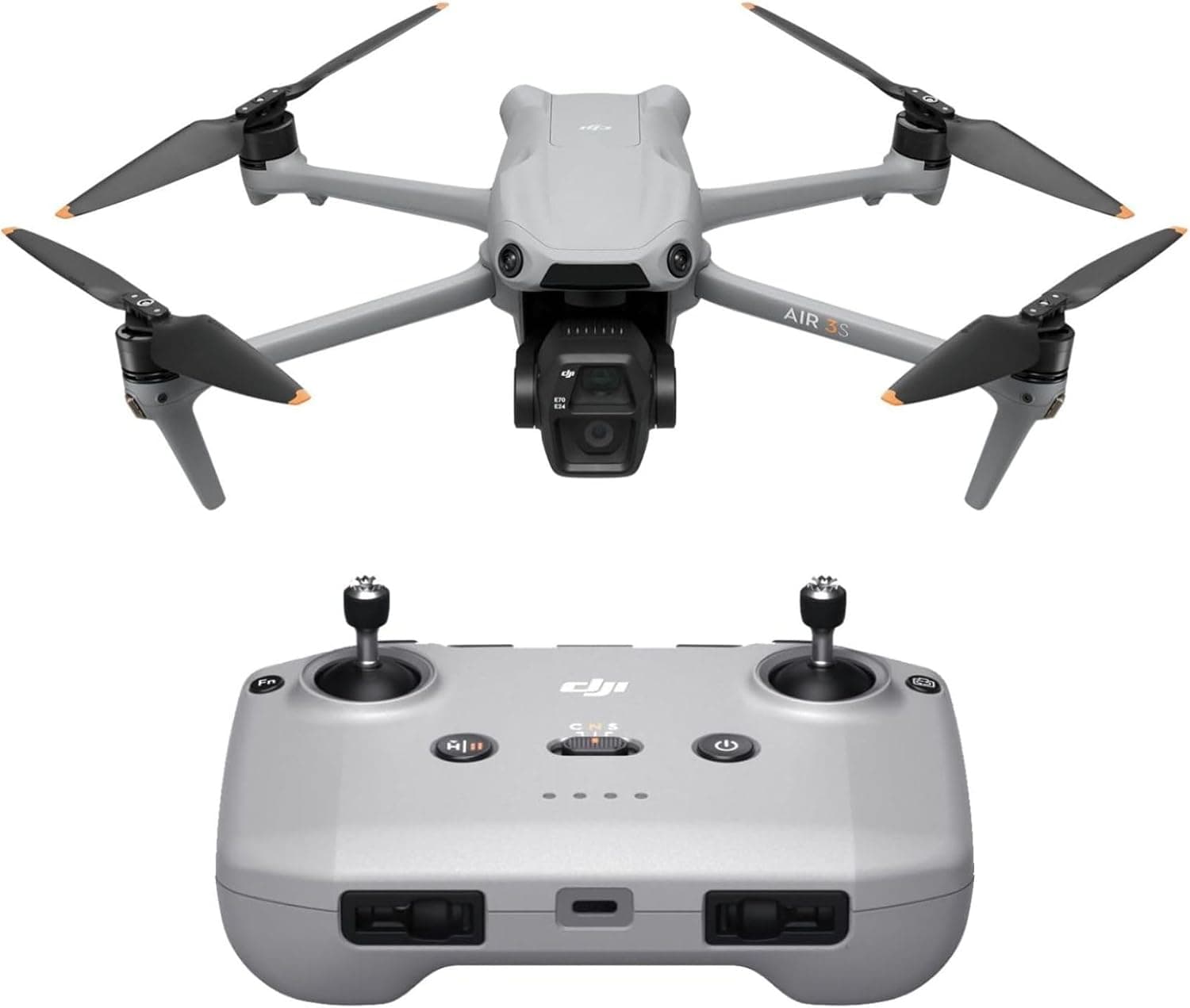
DJI Air 3S with the RC-N3 controller, a 4K dual-camera drone with a 1-inch CMOS main sensor for lighter budgets.
Price range: See on Amazon
What we liked
- + Dual cameras give both wide and tele shots, so framing options stay flexible
- + 1-inch CMOS main sensor improves dynamic range in bright, contrasty scenes
- + RC-N3 version lowers the entry price compared with the screen controller combo
Trade-offs
- - RC-N3 uses your phone as the display, so phone battery drains during shoots
- - Single battery listing means short sessions unless you add more packs
Who this drone is for
This version of the Air 3S is aimed at buyers who want DJI's larger 1-inch sensor image quality but do not need a controller with a built-in screen, since the RC-N3 remote uses a mounted phone as the display instead. According to DJI's official specifications, the Air 3S platform itself, including both cameras and the flight system, is identical regardless of which controller it ships with, so the RC-N3 version is purely a way to lower the entry cost. This is a reasonable pick for pilots upgrading from a smaller drone who already have a capable phone and want to put savings toward extra batteries or accessories instead of a second screen.
Specs and design in plain English
DJI lists a 50 megapixel 1-inch CMOS primary sensor at f/1.8 paired with a 48 megapixel 1/1.3-inch medium telephoto sensor at f/2.8, giving two distinct focal lengths without physically switching lenses, along with 4K video up to 60fps in standard recording modes. DJI states up to 45 minutes of flight time per battery, an O4 transmission system with a 20 kilometer range rating under FCC rules, and omnidirectional obstacle sensing combining binocular vision, forward-facing LiDAR and an infrared sensor. The RC-N3 controller itself has no screen, so it relies on a phone mounted in a clamp above the sticks running the DJI Fly app for the live camera feed and flight telemetry.
Flying it and living with it
Setup with the RC-N3 means clamping a phone into the controller and connecting a cable before each session, which adds a small step compared with screen equipped remotes but keeps the controller itself lighter and cheaper. Because the phone is doing double duty as the display, its own battery drains during longer flights, so pilots who fly extended sessions should keep a charging cable or power bank on hand. Day to day flying otherwise matches the Air 3S experience overall, including the dual camera switching in the DJI Fly app and the same obstacle sensing hardware found on the pricier RC 2 combo, since the aircraft itself does not change.
Trade-offs and how it compares
Against the same Air 3S sold with the RC 2 screen equipped controller, this RC-N3 version gives up the built-in display to reach a lower price, which is a straightforward trade for buyers who already trust their phone as a flight display. Stepping up to the DJI Mavic 3 Pro adds a third Hasselblad camera and higher end video specs at a considerably higher price and larger footprint. Compared with DJI's Mini series, the Air 3S again trades pocketability for the larger 1-inch sensor, longer range and heavier build, which is the defining choice buyers make when picking this size class over DJI's smallest drones.
Verdict and who should pick something else
For pilots who want the Air 3S dual camera system and 1-inch sensor at the lowest entry price DJI offers for this model, the RC-N3 version is the sensible pick, provided a phone mounted display does not bother you and your phone can handle the drain of an extended flight. Buyers who prefer not to rely on their phone at the field, or who fly long sessions and do not want to manage phone battery alongside drone battery, should pay the premium for the RC 2 combo instead. Anyone who needs the smallest and lightest DJI drone available should look at the Mini series rather than either Air 3S option.
Frequently asked questions
Do I need a phone to use the RC-N3 controller?
Yes, the RC-N3 has no built-in screen and requires a phone mounted in the controller clamp running the DJI Fly app to see the camera feed and settings.
Is the camera different between the RC-N3 and RC 2 versions?
No, both use the identical Air 3S aircraft with the same dual camera system; only the controller and its display differ between combos.
How far can the Air 3S transmit video?
DJI lists a 20 kilometer transmission range for the O4 system under FCC rules, though actual usable range depends on local regulations and line of sight conditions.
Prices change often, so check the current price and availability on Amazon.
Check price on AmazonDrone FPV Lab may earn a commission from the link above.