SpeedyBee F405 V3 Flight Controller Stack 30x30 with 4-in-1 50A 6S ESC for DJI O3 Review (2026)
Updated September 14, 2026 · Research-based review
Our verdict
A solid mid-range flight controller and ESC stack for 5 inch freestyle quads running DJI's digital HD system, with app based setup for builders who do not want to fight Betaflight by hand. The 50A ESC and V3 revision trail SpeedyBee's newer V4 stack, so pilots chasing the highest headroom should compare both first.
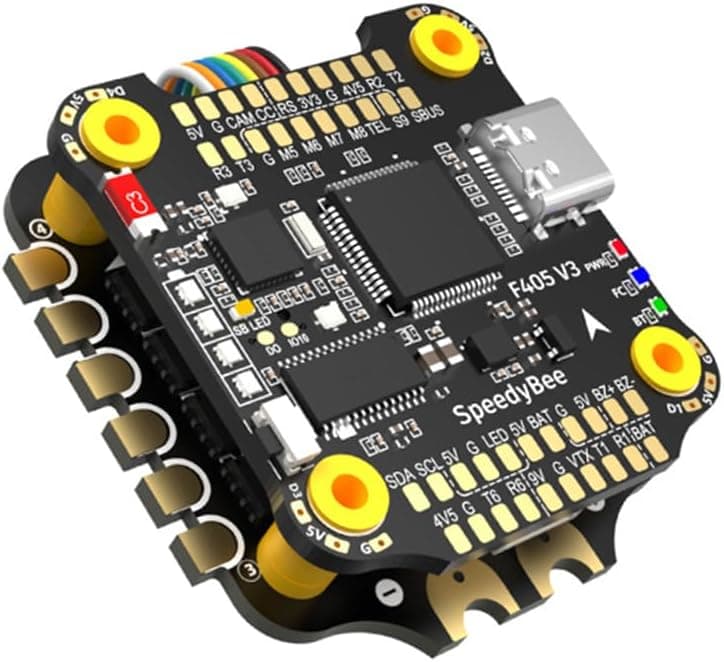
SpeedyBee F405 V3 flight controller stack in 30x30 with a 4-in-1 50A 6S ESC and DJI O3 wiring support.
Price range: $ (Budget)
What we liked
- + DJI O3 plug support makes digital video wiring simple
- + 6S-capable 50A ESC handles powerful freestyle builds
- + SpeedyBee app configuration is quick and beginner friendly
Trade-offs
- - V3 is an older revision than the V4 stack
- - 50A limit is lower than newer higher-current stacks
Who this stack is for
This stack targets freestyle and light racing pilots building a 5 inch quad around DJI's O3 digital HD air unit, since the flight controller includes a dedicated DJI plug that connects without rewiring or splicing into UART pads. Builders who want to avoid manually flashing Betaflight targets and tuning through the CLI benefit most, because the SpeedyBee app walks through motor direction, receiver binding, and basic tuning steps on a phone or tablet over Bluetooth. Pilots planning a 6S power system get support for that voltage range from the 4-in-1 ESC, making this a reasonable base for punchier freestyle builds rather than just 4S setups. Racers chasing the absolute lightest, highest current stack for competitive racing should look further up SpeedyBee's lineup, since this is a mid tier offering rather than a flagship.
What is on the board
The flight controller uses an STM32F405 processor, the same class relied on across most mid range Betaflight boards, with six UART ports total, one dedicated to Bluetooth and another to ESC telemetry, leaving enough free ports for a receiver, VTX control, and a GPS module if needed. It includes a microSD card slot for blackbox logging, four sets of LED strip pads, and 5V and 9V regulated outputs to power a camera or VTX directly from the board. The 4-in-1 ESC is rated for 50A continuous per motor with a 55A burst rating, running BLHeli_S firmware out of the box, though it can be reflashed to Bluejay for bidirectional DShot and RPM filtering support. Both boards share a 30.5 by 30.5mm mounting pattern, the standard size for 5 inch frames, and stack together with a listed flight controller footprint of about 41.6 by 39.4mm.
Setting it up and flying with it
Because the flight controller has a built in DJI plug, wiring the O3 air unit is a matter of connecting a single cable rather than soldering four separate signal, power, and ground wires, which shortens build time noticeably for pilots already running DJI digital systems. The SpeedyBee app pairs over Bluetooth and covers most of the initial setup that would otherwise need Betaflight Configurator on a laptop, including motor direction and basic PID adjustments, though experienced pilots can still drop into full Betaflight Configurator for deeper tuning. Blackbox logging through the microSD slot is useful for diagnosing oscillations or prop wash after a tune, letting pilots review flight data rather than guessing at PID changes. First time builders should still expect to solder motor and battery leads, since the DJI plug only handles the video and control connection, not power distribution.
Trade-offs and how it compares
SpeedyBee's own F405 V4 stack raises the ESC rating to 55A continuous and adds refinements over this V3 board, so pilots who want the newest revision and slightly more current headroom for heavier 6S builds should compare pricing against the V4 before settling on the V3. Against the captainrc F405 stack, which offers a 55 to 65A ESC option, this SpeedyBee stack trades some current capacity for the convenience of the DJI plug and companion app, which matters more to pilots prioritizing a smooth build process over squeezing out maximum motor headroom. Compared with basic F405 stacks that lack a DJI plug entirely, this board saves meaningful wiring time for anyone committed to the O3 digital system, though analog-only pilots gain nothing from that specific feature.
Verdict and who should look elsewhere
For freestyle pilots building a 5 inch DJI O3 quad who want an app guided setup and a dependable 50A ESC, this SpeedyBee stack is a practical, well documented choice with enough UART ports and telemetry support for most builds. Pilots who need the highest current ceiling for heavy 6S freestyle rigs or big prop setups should step up to SpeedyBee's V4 stack or a higher amperage ESC from another brand, since 50A continuous is adequate but not class leading in 2026. Analog-only builders who will never use the DJI plug can save a little money with a simpler F405 stack that skips that connector, since they will not use the feature this board is partly built around.
Frequently asked questions
Does this SpeedyBee stack work with DJI's O3 Air Unit without extra wiring?
Yes, the flight controller has a dedicated DJI plug that connects directly to the O3 air unit's video and control cable without needing to solder into UART pads.
What is the ESC current rating on this stack?
The 4-in-1 ESC is rated for 50A continuous current per motor with a 55A burst rating, and supports 3S to 6S LiPo batteries.
Do I need a laptop to set this flight controller up?
Not for basic setup. The SpeedyBee smartphone app handles binding, motor direction, and initial tuning over Bluetooth, though full Betaflight Configurator is available for deeper adjustments.
How is this different from the SpeedyBee F405 V4 stack?
The V4 stack is a newer revision with a 55A continuous ESC rating, while this V3 stack is rated for 50A continuous, making the V4 the better choice for pilots wanting more current headroom.
Prices change often, so check the current price and availability on Amazon.
Check price on AmazonDrone FPV Lab may earn a commission from the link above.