Matek M10Q-5883 GNSS Compass Module Ublox SAM-M10Q QMC5883L for RC Drone FPV Racing Review (2026)
Updated September 20, 2026 · Research-based review
Our verdict
The Matek M10Q-5883 pairs a modern u-blox M10 GNSS chipset with a QMC5883L compass in a small, well documented module that suits INAV or ArduPilot navigation builds. It needs deliberate mounting and calibration away from noisy power wiring, and it is slightly larger than a GPS-only module.
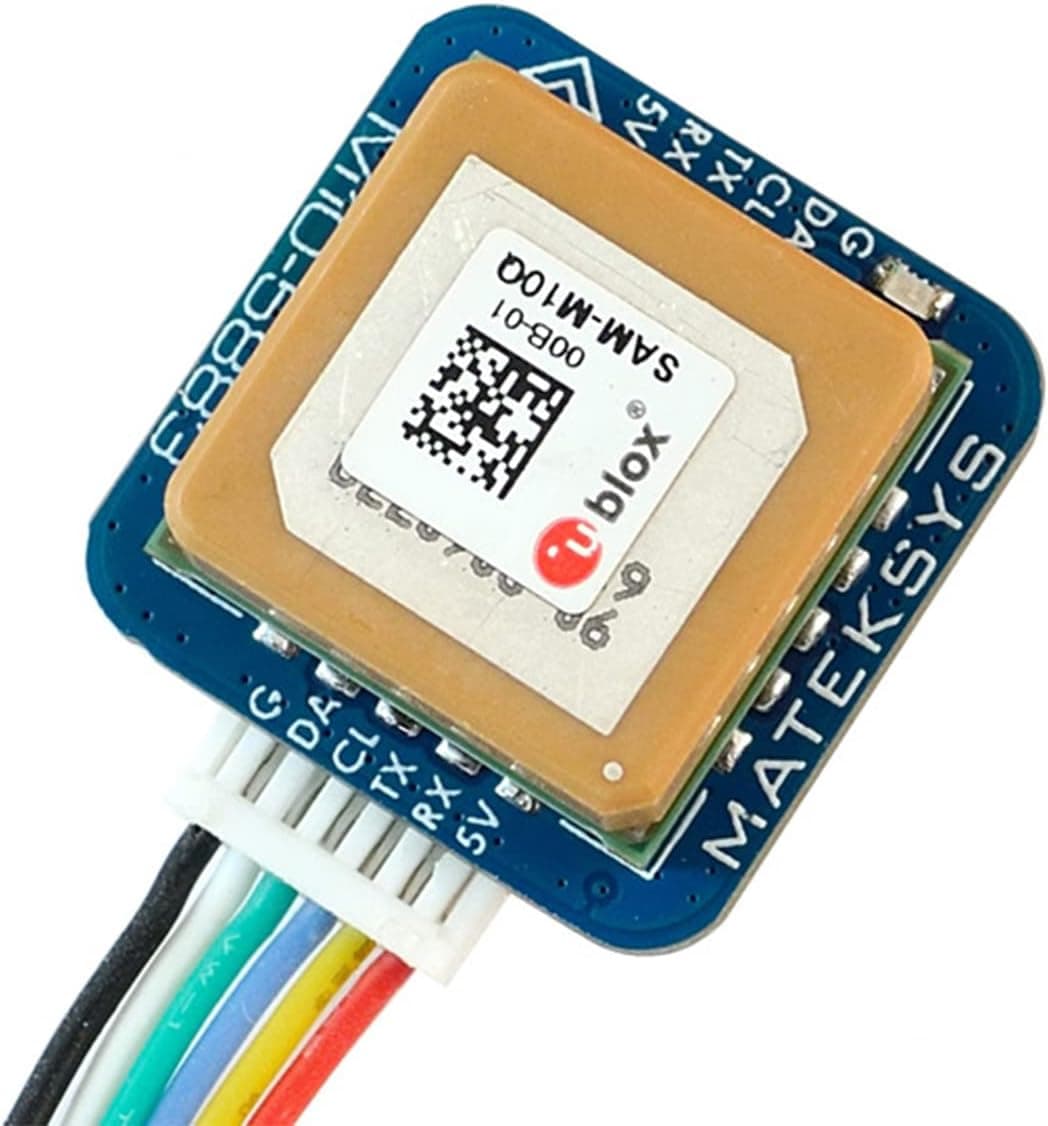
Matek M10Q-5883 GNSS and compass module with a Ublox SAM-M10Q chip and QMC5883L compass for FPV drones.
Price range: See on Amazon
What we liked
- + Ublox SAM-M10Q gives fast, reliable satellite locks
- + QMC5883L compass enables navigation modes in INAV and ArduPilot
- + Matek is a trusted brand with clear documentation
Trade-offs
- - Compass needs calibration and careful placement
- - Slightly larger than GPS-only modules without a compass
GNSS receiver and satellite performance
This module is built around the u-blox M10 series chipset, which can track four satellite constellations at once, GPS, GLONASS, Galileo, and BeiDou, giving it more satellites to lock onto than older single or dual constellation modules. Matek pairs it with a 15mm by 15mm patch antenna that has an omnidirectional radiation pattern, so it does not need to be pointed in a specific direction to get a solid signal, which simplifies mounting on a small drone frame. The module supports UBX protocol updates at up to 5Hz when tracking GPS, Galileo, and BeiDou B1C together, or NMEA output at 1Hz, giving flight controllers frequent position updates for smoother navigation and return-to-home behavior.
Compass and navigation modes
Alongside the GNSS receiver, the module includes a QMC5883L magnetic compass connected over I2C, which supplies heading data that GPS alone cannot provide, especially when a drone is hovering or moving slowly. That combination of GPS position plus compass heading is what unlocks navigation-dependent flight modes such as position hold, waypoint missions, and return-to-home in firmware like INAV and ArduPilot. Because the compass reads small magnetic fields, it needs to be mounted away from power wires, motors, and other sources of electromagnetic interference, and it should be calibrated through the flight controller's setup process before relying on it for navigation.
Size, weight and connections
Matek lists the module at 20mm by 20mm by 12.4mm and 8 grams, which is compact but noticeably larger than bare GPS-only modules that skip the onboard compass entirely. It connects through a JST-GH 6-pin connector on a 1.27mm pitch, a small connector standard that is common across Matek's flight controller lineup, so pairing it with a matching Matek stack is generally plug and play. Input voltage is rated from 4 to 9 volts, with a 5V regulated pad and pin also broken out, and Matek lists power draw at around 13 milliamps, a modest load on a typical flight controller's 5V rail.
Build quality and documentation
Matek is a well established brand in the FPV and long-range drone space, and its GPS and flight controller modules are widely used and documented across community wikis, INAV and ArduPilot forums, and retailer product pages, which makes troubleshooting a wiring or configuration issue considerably easier than with a lesser known brand. The module is rated for an operating temperature range of negative 20 to 80 degrees Celsius, which covers the vast majority of outdoor flying conditions pilots are likely to encounter. Because GNSS and compass modules of this type are exposed on top of the frame for a clear sky view, they are also more vulnerable to prop strikes or crash damage than components tucked inside the stack.
Who should buy this module
This module fits builders who specifically want GPS-assisted navigation modes like position hold, waypoints, or return-to-home in INAV or ArduPilot, rather than pilots flying pure acro who have no use for a compass at all. The four-constellation u-blox M10 chipset and clearly documented pinout make it a safe, well supported choice for a long-range or navigation-focused build. Anyone building a minimal weight racing quad with no interest in GPS features would be better served by skipping a GNSS and compass module entirely rather than adding the extra weight and mounting complexity.
Frequently asked questions
Which satellite systems does the M10Q-5883 support?
It uses a u-blox M10 chipset that can track GPS, GLONASS, Galileo, and BeiDou simultaneously.
What compass chip is built into this module?
It includes a QMC5883L magnetic compass connected over the I2C bus, separate from the GPS's UART connection.
What connector does the M10Q-5883 use?
It uses a JST-GH 6-pin connector on a 1.27mm pitch, which matches many Matek flight controller stacks.
Do I need to calibrate the compass before flying?
Yes, the compass should be calibrated through your flight controller's configurator and mounted away from power wires and motors to avoid magnetic interference.
Prices change often, so check the current price and availability on Amazon.
Check price on AmazonDrone FPV Lab may earn a commission from the link above.