RUSHFPV Tank Mini FPV VTX 20x20mm 25-800mW 5.8GHz with MMCX Antenna Review (2026)
Updated September 21, 2026 · Research-based review
Our verdict
The Tank Mini VTX suits pilots building 3 inch and toothpick-class quads who need a compact 20x20mm video transmitter with real power headroom. Small size and a wide power range are the main strengths, while running it at higher power in a tight stack needs attention to airflow.
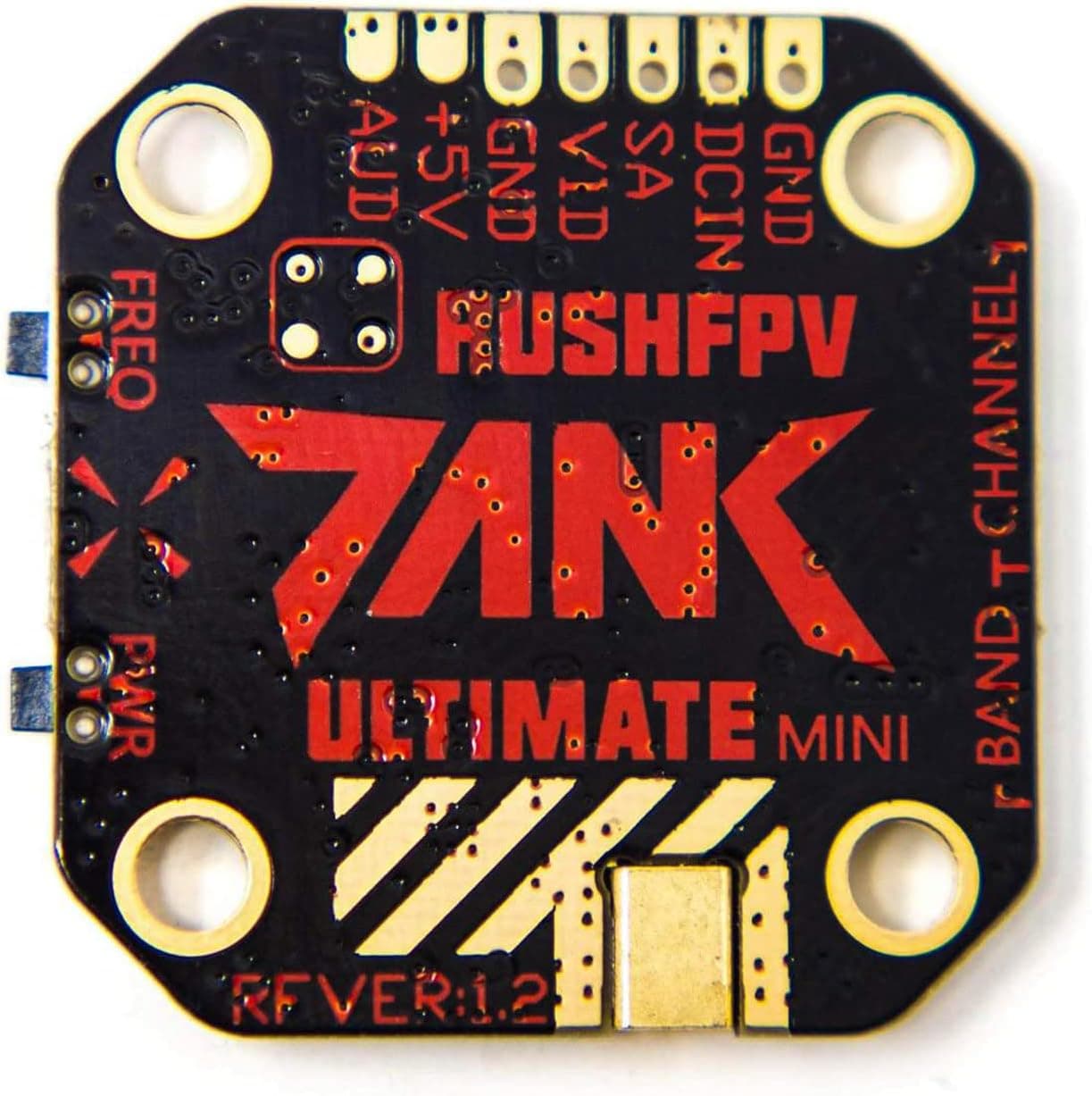
RUSHFPV Tank Mini VTX in a 20x20mm stack format with 25-800mW output on 5.8GHz and an MMCX antenna connector.
Price range: See on Amazon
What we liked
- + 20x20mm mounting fits compact 3 inch and toothpick-style frames
- + 25-800mW range covers indoor race limits and longer outdoor flights
- + MMCX connector is small and secure, which saves weight on mini builds
Trade-offs
- - Small board runs warm at high power, so keep it in the airflow
- - MMCX antennas are not interchangeable with SMA ones without an adapter
Who it is for
This VTX targets builders working with small-frame quads where board space is tight, particularly 3 inch and toothpick-style builds using a 20x20mm stack footprint rather than the larger 30x30mm mounting common on 5 inch freestyle and racing quads. Its power range covers both ends of typical use, from a pit mode and low output suited to flying indoors or at tightly regulated race events, up through 800mW for pilots who want more range on outdoor flights where signal penetration through trees or buildings matters more. Pilots building a dedicated indoor or micro-class quad alongside a larger outdoor freestyle machine are a natural fit, since the same VTX can be configured down for indoor limits or up for outdoor range depending on the event.
Size and mounting
At a 20x20mm mounting pattern with M3 holes for the board and M2 holes for the shield, the Tank Mini slots directly into the stack layout used by most modern 3 inch and toothpick frames without needing an adapter plate or nonstandard mounting. The board itself measures a compact 28 by 28 by 3.3mm, and weighs under 5 grams without its protective cover or a little over 5 grams with it attached, which is light enough that it does not meaningfully affect the flight characteristics of a small quad the way a heavier full-size VTX would. An MMCX antenna connector keeps the antenna interface compact too, matching the smaller scale of the rest of the board.
Power and control
Output steps through PIT mode, 25mW, 200mW, 500mW, and 800mW, giving a genuinely wide range from race-legal minimum power up to enough output for meaningful outdoor range on a small quad. TBS Smart Audio support means power level, channel, and band can all be adjusted from the transmitter or a supported OSD menu rather than needing physical buttons on the VTX itself, which is a real convenience on a board this small where physical controls would be awkward to reach once it is buried in a stack. Current draw scales with power level, from a low 40mA in pit mode up to roughly 380mA at the full 800mW setting, which is worth factoring into overall power budget on a small quad already balancing a compact battery.
Things to plan for
Running any small-board VTX at its higher power settings for extended periods generates meaningful heat in a small package, and the Tank Mini is no exception, so builders should make sure it sits somewhere in the stack with reasonable airflow rather than sandwiched tightly between other boards with no ventilation, particularly if 500 or 800mW gets used regularly rather than just occasionally. The MMCX connector, while compact and secure, is not interchangeable with the more common SMA or RP-SMA antennas found on many other VTXs and receivers without an adapter, so builders switching antennas between different gear in a kit bag need to keep that in mind or carry an adapter.
Bottom line
For a 20x20mm stack build, the Tank Mini packs genuine power flexibility, Smart Audio control, and a low weight into a board that fits the space most 3 inch and toothpick frames actually have available. It is a sensible choice for pilots who want one VTX that can be dialed down for indoor or race-limited flying and dialed up for outdoor range without swapping hardware. The main things to manage are heat at sustained high power and the MMCX connector's lack of interchangeability with SMA-based antenna collections, neither of which are dealbreakers but both worth planning around during the build.
Frequently asked questions
What frame sizes is the Tank Mini VTX suited for?
Its 20x20mm mounting pattern fits the stack layout on 3 inch and toothpick-class frames rather than larger 30x30mm freestyle builds.
What power levels does the Tank Mini support?
It steps through pit mode, 25mW, 200mW, 500mW, and 800mW, adjustable through TBS Smart Audio.
Does the Tank Mini get hot at higher power?
It can run warm at sustained 500 to 800mW output, so placing it with reasonable airflow in the stack is worth planning for.
Can I use SMA antennas with the Tank Mini?
Not directly. It uses an MMCX connector, so an adapter is needed to use SMA or RP-SMA antennas with it.
Prices change often, so check the current price and availability on Amazon.
Check price on AmazonDrone FPV Lab may earn a commission from the link above.