Ruko GPS Drone with 4K Camera, 90 Min Flight, 245g Foldable Quadcopter Review (2026)
Updated September 14, 2026 · Research-based review
Our verdict
This Ruko foldable quadcopter pairs a 4K camera and brushless motors in a 245g body, with 90 minutes of listed flight time spread across its included batteries. It is a strong pick for long filming days on a budget, though that time is not one continuous flight and the light frame is more wind sensitive than heavier brushless drones.
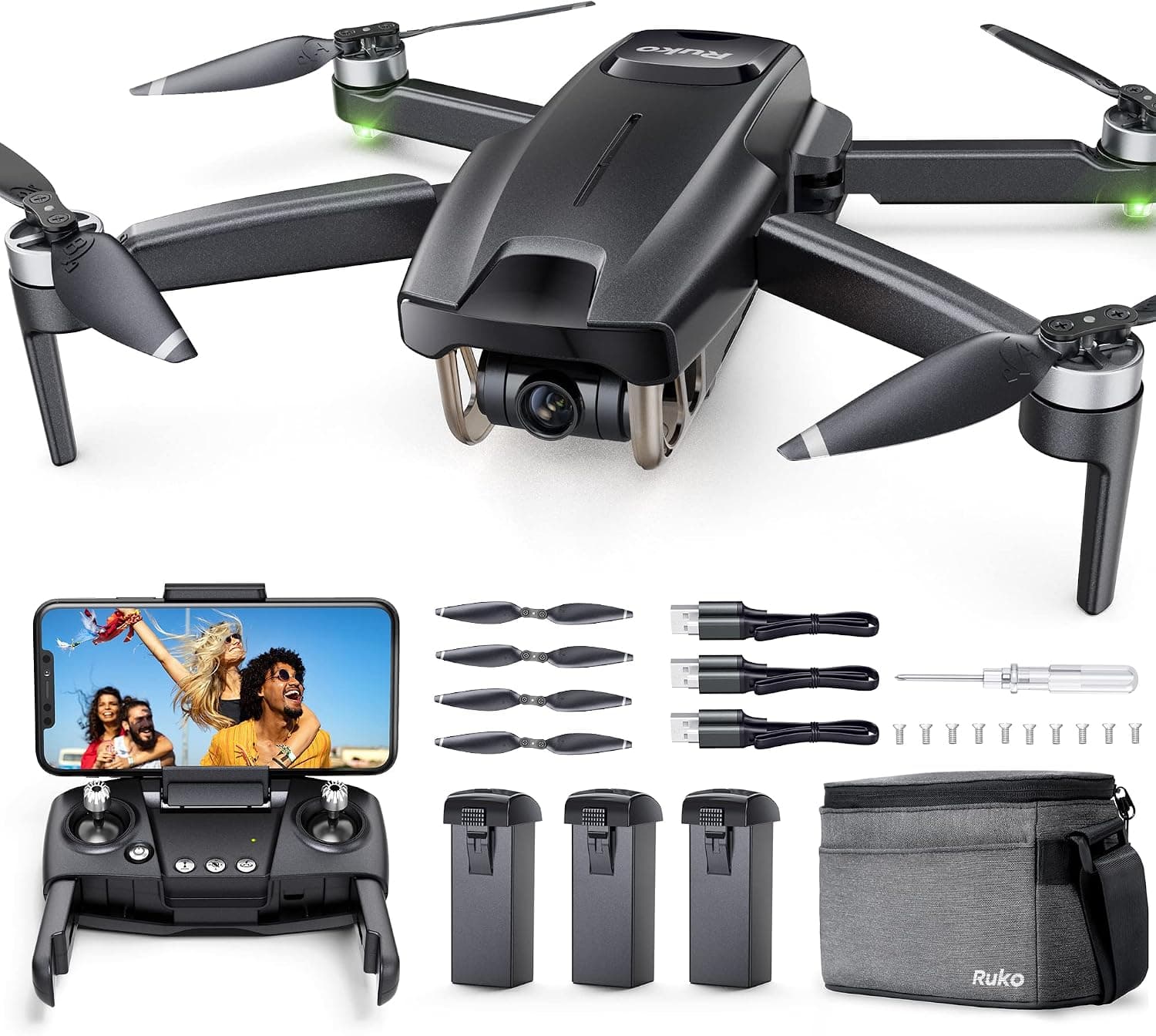
Ruko foldable GPS quadcopter with brushless motors, a 4K camera, 90 Min listed flight time and a 245g airframe.
Price range: See on Amazon
What we liked
- + 90 Min of listed flight time across batteries allows long filming days
- + 245g foldable body keeps it light while carrying a 4K camera
- + Brushless motors give efficient power and better durability than brushed drones
Trade-offs
- - Long listed flight time is spread over several packs, not one battery
- - Light 245g frame struggles more in strong wind than heavier brushless drones
Who This Ruko Drone Suits
This drone fits buyers who want to shoot a full afternoon of 4K footage without constantly swapping in a single, expensive long life battery, since Ruko spreads the 90 minute rated flight time across multiple included packs instead. The 245g airframe keeps it in the lighter drone class that many regions treat more leniently for registration, an advantage over Ruko's own heavier F11 series models. Brushless motors add durability and efficiency compared with brushed motor drones at a similar price, which matters for anyone who expects to fly often rather than a few times a year. It is a weaker fit for pilots chasing a truly long single flight or for those who need strong wind resistance, since the light foldable frame will feel the effects of gusty conditions sooner than a heavier brushless design.
Camera, Motors, and Flight Time Explained
The 4K camera is the headline feature, giving noticeably more detail than the 1080p sensors common on entry-level foldable drones, though buyers should not expect the dynamic range or low light performance of a larger sensor drone like the DJI Mini series. Brushless motors run cooler and last longer under repeated use than the brushed motors found on cheaper foldables, and they are a large part of why Ruko can offer GPS features like auto return without draining the battery too quickly. The 90 minute flight time figure is a combined total across the included batteries rather than one continuous flight, a common practice across this entire category, so real single-session flights will run a fraction of that number depending on how many batteries ship with the kit.
Folding, Flying, and Basic Care
The foldable arm design is built for portability, letting the drone pack down small enough for a daypack or camera bag side pocket rather than needing a dedicated hard case. Setup follows the standard GPS drone routine: charge the batteries fully before the first flight, install Ruko's companion app, bind the remote, and wait for GPS lock before taking off so return-to-home functions correctly. Because the frame is light at 245g, owners should avoid flying in anything beyond a light breeze, since wind pushes a sub-250g airframe around more than it would a heavier brushless quadcopter. Routine care includes wiping the lens and folding hinges after dusty flights and storing batteries at a partial charge between longer gaps in use.
Where It Beats and Loses to Rivals
In this brushless drone comparison it ranks first among the listed options, ahead of the Ruko U11PRO, Contixo F28 Pro Mini, and a competing 60 minute foldable model, largely because of its combination of light weight and long combined flight time. Against the Contixo F36, which leans into long range transmission instead of ultralight weight, this Ruko model trades some distance capability for a smaller, more travel-friendly package. Compared with the generic GPS drone that ranks lowest in this same brushless group, this model benefits from Ruko's established brand, which typically means easier access to replacement batteries and props than an unbranded listing offers.
Verdict and Alternatives Worth a Look
For pilots who want a light, packable 4K drone with strong combined battery life and the backing of a known drone brand, this Ruko model is a sound choice and lands at the top of this brushless comparison, earning our score of 8.6 out of 10. Anyone who regularly flies in breezy conditions, or who wants a heavier and more stable airframe, should look at the Contixo F28 Pro Mini or a similarly weighted brushless alternative instead, since added mass generally brings added wind stability. Buyers should also confirm exactly how many batteries ship in their specific listing, since the total flight time depends directly on that count.
Frequently asked questions
Is the 90 minute flight time one battery charge?
No, it is a combined total across the batteries included with the kit, not a single continuous flight, so plan for shorter individual sessions with battery swaps.
Does the light 245g frame handle wind well?
Light foldable drones like this one are more affected by wind than heavier brushless models, so it flies best in calm to light breeze conditions.
Does it use GPS for auto return?
Yes, GPS position hold and auto return are standard features that bring the drone back automatically if the battery runs low or signal drops.
Is this drone under the 250 gram weight limit?
Yes, at 245g it falls under the common 250 gram threshold some regions use for lighter registration rules, though local laws should always be checked directly.
Prices change often, so check the current price and availability on Amazon.
Check price on AmazonDrone FPV Lab may earn a commission from the link above.