BLACK PEARL Flysight RC801 5.8Ghz FPV Diversity Monitor 7 Inch with DVR and HDMI Review (2026)
Updated September 21, 2026 · Research-based review
Our verdict
The Black Pearl RC801 suits ground crews and event spectators who want a shareable screen-based FPV view rather than individual goggles. A built-in battery and diversity receiver make it easy to set up anywhere, while its size and analog screen mean it needs shade and a stand for comfortable outdoor viewing.
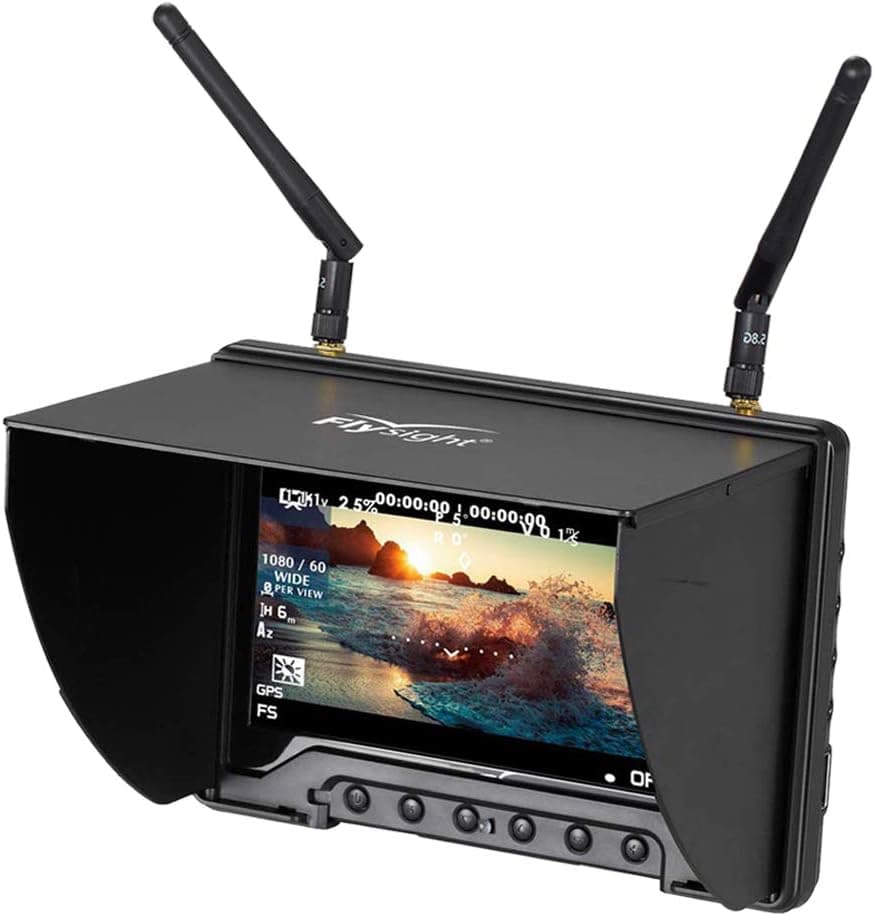
BLACK PEARL Flysight RC801 7 Inch FPV monitor with a 5.8Ghz diversity receiver, DVR and HDMI for ground station use.
Price range: See on Amazon
What we liked
- + 7 Inch screen is large enough for crews and event spectators
- + Diversity receiver keeps the image stable when the quad moves around
- + HDMI input makes it useful for simulators and camera previews too
Trade-offs
- - Bulky monitor needs a stand or tripod for comfortable viewing
- - Analog screen can wash out in bright direct sunlight without a hood
Who it is for
A monitor like the RC801 fills a different role than goggles, aimed at pilots who want a spotter or ground crew member to follow the flight alongside them, or at event organizers who want spectators to see what a quad is seeing without handing out multiple sets of goggles. Freestyle and long-range pilots who like a second set of eyes watching for obstacles or other aircraft benefit from a monitor a friend can hold or mount nearby, and instructors teaching a new pilot often prefer a shared screen so they can watch the same feed as the student in real time. It is less suited to a pilot's own primary FPV view during flight, where goggles remain the standard for immersion and reaction time.
Screen and diversity
The RC801 uses a 7 inch screen at 1024x600 resolution, a sharp panel by analog FPV monitor standards, backed by a 5.8GHz diversity receiver pulling from two antennas rather than one. As with diversity goggles and ground receivers, the two-antenna setup automatically favors whichever antenna currently has the cleaner signal, which helps the picture stay stable as the quad changes orientation and distance relative to the monitor's position on the ground. The screen supports several display modes and can rotate 90 degrees for a portrait orientation, useful in different mounting setups such as a tripod at a race gate versus a table at a spectator area.
Power and portability
A built-in rechargeable battery is one of the RC801's more practical features, removing the need to run a separate battery pack and wiring just to power a ground monitor, which simplifies setup considerably compared with monitors that require an external power source from the first flight. It also accepts a wide DC input range for charging or running from a bench supply when the internal battery is not convenient, giving flexibility between quick field setups and longer stationary use at an event. An integrated DVR records the incoming video directly to the monitor as well, giving crew or spectators a saved copy of the flight without needing a separate recording device wired into the video chain.
Practical limitations
At 7 inches across, the RC801 is not a small or pocketable accessory, and comfortable extended viewing generally calls for a stand, tripod, or at least a stable surface rather than holding it by hand for a long session, which is worth planning for before heading to a field with limited furniture. Like most analog screens, visibility drops in bright direct sunlight, and the attached sunshade hood helps but does not fully solve the problem on a very bright day, so positioning the monitor with the sun at the viewer's back or in some shade makes a real difference to usability. These are common limitations across screen-based FPV monitors generally rather than unique flaws in this specific model.
Bottom line
For crews, instructors, and event settings where more than one person needs to see the FPV feed at once, the RC801 packs a sharp screen, dual-antenna diversity reception, a built-in battery, and DVR recording into one self-contained unit that sets up quickly without extra cables. It is a tool for shared or spectator viewing rather than a pilot's primary flying view, and getting the most out of it outdoors means bringing a stand and picking a shaded viewing spot rather than expecting the built-in sunshade alone to handle bright conditions.
Frequently asked questions
Is the RC801 meant to replace FPV goggles?
No, it is a ground monitor for crew, instructors, or spectators to follow the flight; pilots typically still fly using goggles for their own view.
Does the RC801 need an external battery to run?
No, it has a built-in rechargeable battery, though it also accepts external DC power for charging or bench use.
What is the screen resolution on the RC801?
The 7 inch display runs at 1024x600 resolution.
How well does the screen work in bright sunlight?
Like most analog monitor screens, visibility drops in direct sun, and while an attached sunshade hood helps, positioning the monitor in shade improves visibility further.
Prices change often, so check the current price and availability on Amazon.
Check price on AmazonDrone FPV Lab may earn a commission from the link above.