Soldering Iron Kit 60W 30-in-1, 5 Tips, Digital Multimeter, Solder Wire, Paste, Desoldering Pump, Tweezers Review (2026)
Updated September 14, 2026 · Research-based review
Our verdict
A 60W adjustable iron bundled with a digital multimeter, solder wire, paste, a desoldering pump and tweezers, for a hobbyist setting up a first electronics bench. The multimeter stands out for checking shorts before a battery connects, though the many extras mean no single tool here is premium grade.
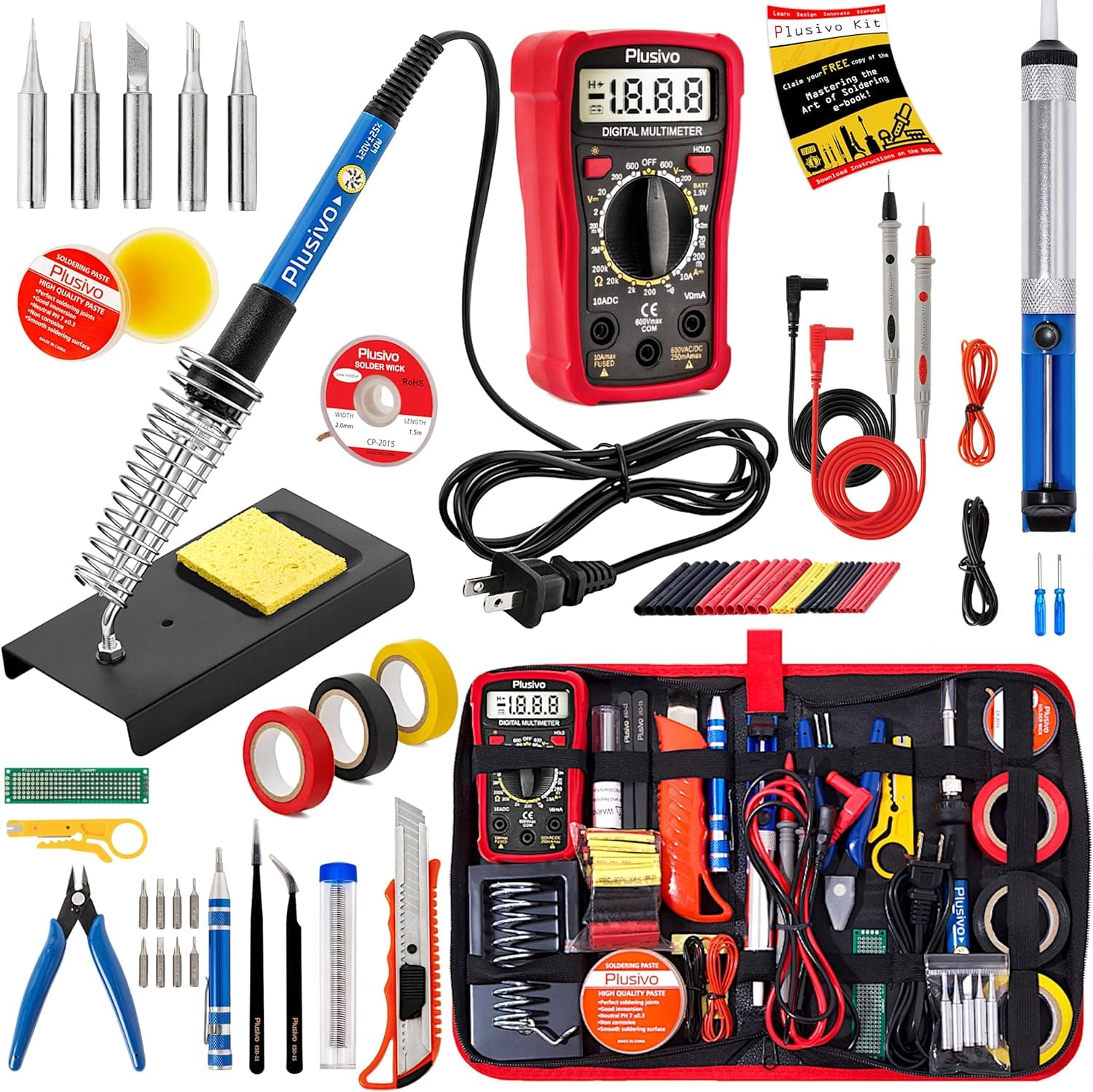
Soldering iron kit at 60W, 30-in-1 with 5 tips, a digital multimeter, solder wire, paste, desoldering pump and tweezers.
Price range: See on Amazon
What we liked
- + Digital multimeter lets you check for shorts before plugging in a battery
- + Solder paste and wire cover both pad tinning and wire joints
- + 30-in-1 bundle is a complete starter bench for new builders
Trade-offs
- - Budget multimeter accuracy is fine for continuity but not precision work
- - Many extras mean each individual tool is basic quality
What a 30-in-1 bundle actually gets you
This kit centers on a 60W adjustable temperature iron and stretches the count to 30 pieces by including a digital multimeter, solder wire, solder paste, a desoldering pump, tweezers, a stand and several interchangeable tips. For someone assembling their first FPV soldering bench, that spread removes the guesswork of sourcing each item separately, and the paste covers pad tinning while the wire handles wire to wire joints and connector work. The 120V US plug version is built for home outlets rather than field use, so it suits a workbench setup more than a flying field repair kit. Buyers who already own most of these tools individually will find less value than someone starting completely from zero.
The digital multimeter is the real headline feature
Most budget soldering kits skip a multimeter entirely, so including a digital one here is notable for FPV work specifically, where checking a freshly built power lead for a short before ever connecting a battery can prevent a fire or a fried flight controller. It reads continuity and basic voltage reliably enough for that safety check and for confirming a motor phase wire is not shorted to the frame. It is not built for precision diagnostic work on sensitive flight controller signal lines, where a dedicated bench meter with finer resolution does a better job. Treat it as a go or no go safety tool rather than a lab instrument and it earns its place in the box.
Living with the iron day to day
The 60W iron reaches working temperature quickly and has enough power for common FPV soldering jobs like motor wires, XT60 connectors and flight controller pads, with the 5 included tips covering fine work and slightly larger joints. The desoldering pump and paste round out a workflow for removing a burnt component and prepping a new one without buying separate supplies. Because the kit packs in so many pieces at a modest price, individual items like the tweezers and stand are basic rather than premium, and the plastic components common to this price tier will not match a dedicated bench tool in stiffness or finish. For occasional builds and repairs that tradeoff is reasonable.
How it stacks up against other soldering kits
Within the soldering kit lineup this model sits near the top for its combination of the digital multimeter and the paste plus wire plus pump combo, ranking above rivals like the ANBES 60W kit and the ANBES-style dial controlled sets. It carries the same 60W output as the ANBES kit but adds the multimeter, giving it an edge for anyone who wants that safety check built in. Against higher wattage options like the 21-in-1 90W kit, this iron runs cooler and slower to recover heat on thick battery leads, so heavier gauge work takes more patience. For typical drone electronics rather than thick gauge cable work, the balance favors this kit.
Verdict and who should look elsewhere
This kit fits a beginner or occasional FPV builder who wants one purchase to cover soldering, basic diagnostics and desoldering without hunting down separate tools, and the multimeter genuinely adds safety value that many rival kits skip. Anyone doing frequent thick battery lead work, running an XT90 or 6S pack regularly, will want a higher wattage iron with faster heat recovery instead. Builders who already own a bench multimeter and a decent iron gain little from the bundle beyond consumables like paste and wire. For a first FPV soldering setup on a budget, it is a sensible starting point.
Frequently asked questions
Is the multimeter accurate enough for flight controller diagnostics?
It is reliable for continuity checks and confirming a power lead is not shorted before connecting a battery, but it is not precise enough for fine diagnostic work on sensitive signal lines.
Can the 60W iron handle thick battery leads?
It handles typical FPV wiring and connectors fine, but thick gauge leads on larger packs will heat more slowly than with a higher wattage iron.
What is included besides the iron?
A digital multimeter, 5 tips, solder wire, solder paste, a desoldering pump, tweezers and a stand, according to the manufacturer listing.
Is this kit good for a complete beginner?
Yes, the wide range of included tools and the safety focused multimeter make it a practical single purchase for someone building their first bench.
Prices change often, so check the current price and availability on Amazon.
Check price on AmazonDrone FPV Lab may earn a commission from the link above.