TUOFENG 24 AWG Flexible Silicone Wire, Tinned Copper, 6 Colors 30ft Each Hook Up Wire Review (2026)
Updated September 21, 2026 · Research-based review
Our verdict
This TUOFENG wire suits FPV builders wiring receivers, VTXs, cameras, and other signal-level connections rather than battery or motor power leads. Six colors and a flexible silicone jacket make wiring easy to trace and solder, while the light 24 AWG gauge rules out higher-current jobs.
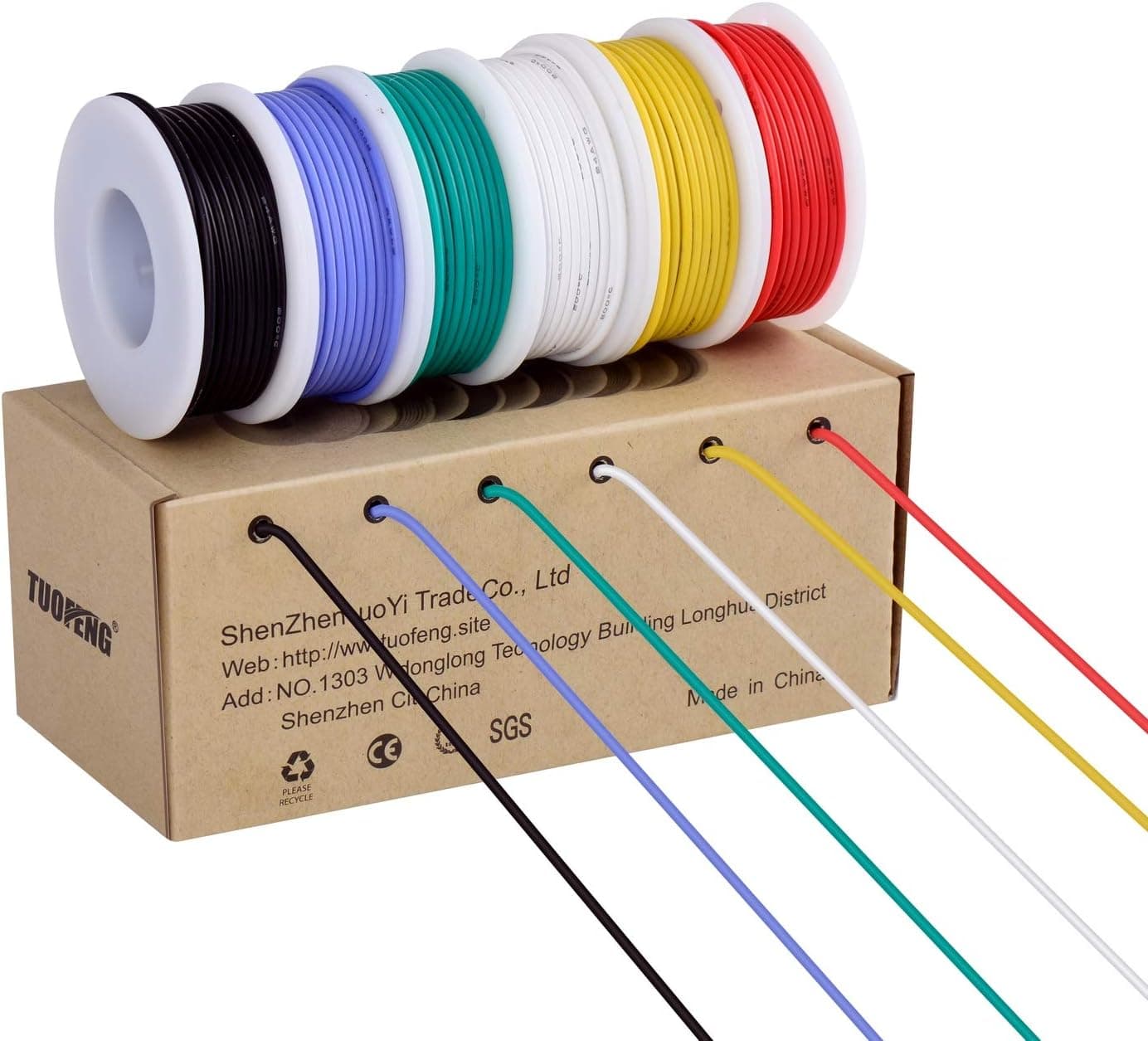
TUOFENG 24 AWG flexible silicone hook up wire in tinned copper, 6 colors with 30ft each for signal wiring.
Price range: See on Amazon
What we liked
- + 24 AWG is ideal for receiver, VTX and camera signal wires
- + 6 colors make wiring clearer and easier to troubleshoot
- + Silicone insulation stays flexible and resists soldering heat
Trade-offs
- - Too thin for battery or motor power leads
- - Large spools take up storage space in a small workshop drawer
Who it is for
This wire is aimed at the signal and low-current side of an FPV build, where a builder is running leads between a flight controller and a receiver, a VTX and its smart audio or telemetry pad, or a camera and its video and power taps. At 24 AWG, it is sized for exactly that kind of connection rather than for anything carrying real current, so it fits alongside a build's main power wiring rather than replacing it. Hobbyists who solder their own stacks together, repair damaged signal wires, or build custom looms for a new frame are the main audience, and the six-color assortment specifically helps anyone who wants to keep a build's many thin wires visually distinct rather than guessing by position alone.
Wire construction
Each conductor is stranded from forty individual strands of tinned copper rather than a single solid core, which is the standard approach for wire that needs to survive vibration and repeated flexing without work-hardening and snapping the way solid wire eventually does on a flying quad. The tin coating on the copper strands resists oxidation and makes the wire easier to tin and solder cleanly compared with bare copper that has started to dull. Overall outer diameter comes in at 1.6mm including the insulation, which is thin enough to route through tight stack mounting holes and cable channels on compact frames without adding noticeable bulk to the wiring loom.
Insulation and ratings
The silicone insulation is rated across a wide temperature range, which matters most during soldering, since silicone shrugs off brief contact with a hot iron tip far better than PVC insulation, which can melt, shrink back, or give off fumes at the same temperature. That heat tolerance also means the wire stays flexible in a wide range of ambient conditions rather than stiffening up in cold weather the way some cheaper insulation does. The wire carries a 300V rating and a stated maximum current around 2 amps, both of which are well beyond what a 24 AWG signal wire in an FPV stack actually sees, so the rating is not the limiting factor for this kind of use, gauge and route length are.
Where it does not fit
24 AWG is too thin for anything carrying meaningful current, so it should not be used for battery leads, ESC power wires, or motor phase wires, where a much heavier gauge is needed to avoid excess resistance and heat buildup under load. Builders need a separate spool of heavier gauge wire, such as 12 to 16 AWG silicone wire, for those connections, and this kit does not cover that need on its own. The 30ft-per-color spools are also generous for most individual builds, which is convenient for a workshop doing many builds over time but means the reels take up noticeably more drawer or shelf space than a small pre-cut wire kit would for someone who only needs a few feet total.
Bottom line
As dedicated signal wire for FPV stacks, this TUOFENG wire does the job well: it is flexible, easy to solder, color coded for clarity, and rated to handle the heat of a soldering iron without drama. It is specifically a signal wire product, though, and pairing it with a separate heavier gauge wire for power and motor leads is necessary to complete a build. For anyone stocking a bench for repeated builds and repairs rather than a single one-off project, the 30ft spools and six colors make it a practical, reusable addition to a parts drawer.
Frequently asked questions
What is 24 AWG silicone wire best used for on an FPV drone?
It suits signal-level connections such as receiver wiring, VTX smart audio, and camera signal and OSD wires, not battery or motor power leads.
Can this wire handle a soldering iron without melting?
Yes, silicone insulation tolerates brief contact with a hot iron tip far better than PVC insulation, which is part of why it is common in FPV builds.
How much wire comes in each color?
Each of the six colors ships with 30 feet, giving enough length for many builds and repairs from one kit.
Do I need other wire gauges alongside this for a full build?
Yes, heavier gauge wire is needed for battery, ESC, and motor power leads since 24 AWG is only rated for light signal-level current.
Prices change often, so check the current price and availability on Amazon.
Check price on AmazonDrone FPV Lab may earn a commission from the link above.